

Atticus Goods stands out as a direct alternative for electronics shoppers, thanks to a broad in-stock catalog and next-day shipping claims that cover computers, networking gear, and gaming peripherals. Beyond that, Walmart and Target work well for everyday bargains, Best Buy and Home Depot cover specialty and DIY tech, eBay handles used and collectible finds, and Costco rewards members with generous return terms. The comparison below breaks down warranties, shipping, and buyer protections so you can pick the right channel for what you’re buying.
TL;DR:
- Atticus Goods offers a vast in-stock electronics catalog with over 250,000 items and claims to provide next-day nationwide shipping.
- When buying refurbished electronics, OEM-certified programs typically include longer warranties, often lasting a year, compared to marketplace listings.
- Checking if a product is sold directly by the retailer rather than a third-party seller is crucial for understanding return policies and warranty coverage.
- Credit card payments provide stronger dispute rights, and marketplace disclosures under the INFORM Consumers Act help verify seller legitimacy.
- Switching from Amazon makes sense when you need specialty parts, clearer shipping guarantees, or manufacturer-backed warranties, but it involves trading convenience for specific benefits.
Table of Contents
- A shortlist of electronics retailers worth your cart
- Warranties, returns, and payment protections that actually matter
- How to pick a channel and buy electronics safely
- Where Atticus Goods fits as a direct alternative
- When it actually makes sense to switch
- Shop electronics directly through Atticus Goods
- Sources
- FAQ
A shortlist of electronics retailers worth your cart
Atticus Goods leads this list because it’s built specifically around electronics and adjacent gear rather than treating tech as one category among thousands. The site lists over 250,000 in-stock products spanning consumer electronics, business technology, networking hardware, and gaming peripherals, and it advertises next-day shipping across the country. For someone who wants a single storefront with deep electronics stock and fast delivery without hunting through unrelated departments, that combination is hard to match among general marketplaces.
The other alternatives each serve a narrower job well. Here’s how they stack up on focus, shipping, warranty windows, and buyer protections.
| Retailer | Electronics focus | Marketplace model | Shipping speed/coverage | Typical warranty/return window | Buyer protections | Best for |
|---|---|---|---|---|---|---|
| Atticus Goods | Broad: computers, networking, gaming, marine electronics | First-party retail | Next-day shipping claim, nationwide | Retailer-stated return policy | Direct customer support | Shoppers wanting a deep in-stock electronics catalog with fast delivery |
| Walmart | Broad consumer electronics, mixed with general goods | First-party and third-party marketplace | Wide coverage, multiple speed tiers | Standard retail return window | Marketplace seller disclosures | Everyday bargains and rollback pricing |
| Best Buy | Specialized consumer electronics | Primarily first-party, certified outlet for refurbished | Store and online, often same-day pickup | Certified outlet warranty terms | In-store Geek Squad support | Electronics with in-person setup and support |
| eBay | New, used, and collectible electronics | Third-party marketplace | Varies by seller | Certified refurbished programs offer extended coverage | Buyer protection and dispute resolution | Hard-to-find used or collectible electronics |
| Target | Household and consumer electronics | First-party retail | Store pickup and same-day in many areas | Standard retail return window | Retailer-managed returns | Household electronics with convenient pickup |
| Costco | New electronics, bulk and warehouse pricing | First-party retail, membership required | Standard shipping, warehouse pickup | Extended member return benefits | Membership-backed return policy | Buyers who value generous return terms |
| Alibaba | Components and bulk electronics sourcing | Third-party wholesale marketplace | Varies widely, often international | Seller-dependent | Marketplace dispute channels | Bulk purchases or component sourcing |
| Rakuten | Electronics via multiple sellers, cashback focus | Third-party marketplace | Varies by seller | Seller-dependent | Cashback rewards program | Shoppers who want cashback plus variety |
| JD (Jingdong) | Broad electronics, strong in Asian markets | Mixed first-party and third-party | Regional, check availability outside its core market | Seller-dependent | Platform-managed disputes | International shoppers researching Chinese-brand electronics |
| Flipkart | Broad consumer electronics | Third-party marketplace | Strong in its home market, limited elsewhere | Seller-dependent | Platform-managed disputes | Shoppers in markets where Flipkart operates |
| Home Depot | Power tools, smart-home devices | First-party retail | In-store pickup, standard shipping | Standard retail return window | Retailer-managed returns | Power tools and smart-home DIY electronics |
| Shopify | Varies by individual merchant storefront | Third-party, merchant-by-merchant | Set by each merchant | Set by each merchant | Merchant-dependent, no unified policy | Buyers seeking a specific independent brand’s storefront |
| Kroger | Limited consumer electronics alongside groceries | First-party retail | Store pickup, limited online electronics range | Standard retail return window | Retailer-managed returns | Occasional electronics buys alongside a grocery run |
A few of these deserve more context than a single row can carry. Alibaba’s strength is volume: if you’re sourcing components or buying in bulk, its supplier base and per-unit pricing are hard to beat, but individual buyer protections vary from seller to seller. JD and Flipkart are worth knowing about if you’re comparing prices internationally, but availability and shipping outside their core markets is inconsistent, so confirm delivery before you commit. Shopify isn’t a single marketplace at all: it’s the software behind thousands of independent electronics storefronts, so your experience depends entirely on which merchant you’re buying from. Kroger’s electronics selection is thin and mostly incidental to its grocery business, useful only if you’re already there for something else.
Warranty expectations differ sharply depending on whether you’re buying new or refurbished. Retailer return windows for electronics typically run 14 to 30 days, while some marketplace-specific refurbished programs extend that to as much as 90 days. Manufacturer-refurbished electronics from brands like Apple or Samsung typically carry a full one-year warranty, which is generally longer than most third-party refurb programs offer.
- Atticus Goods: broad in-stock catalog, fast shipping claim; best when you want electronics and marine gear from one storefront.
- Best Buy or Home Depot: better when you need hands-on setup help or DIY-specific hardware.
- eBay: best for used, collectible, or hard-to-find electronics with certified-refurbished options.
- Costco: best if generous return terms matter more to you than selection breadth.
Pro Tip: Before comparing prices across sites, check whether a listing is “sold and shipped by” the retailer itself. Third-party listings on the same marketplace can carry different return and restocking rules.
Warranties, returns, and payment protections that actually matter
The biggest risk in leaving Amazon isn’t price. It’s losing track of who actually stands behind your purchase when something breaks. That distinction splits into three separate questions: who sold it, who refurbished it, and who processes your return.
Refurbished electronics illustrate this best. Buying directly from an OEM channel, such as Apple Certified Refurbished or Samsung’s equivalent program, usually gives higher certainty on authentic parts and battery quality than a third-party marketplace listing. Marketplaces standardize grading, which adds convenience, but they don’t carry the same manufacturer-backed warranty that OEM channels do. eBay’s Certified Refurbished program is a partial exception: it can include extended protection backed by Allstate, layered on top of standard marketplace return terms.
Return windows and warranty length aren’t the same protection, and it’s worth separating them mentally. A retailer’s 30-day return window covers your right to send something back for a refund or exchange. A manufacturer’s one-year warranty covers defects that show up after that window closes. For big-ticket electronics, long-term support is usually routed through the manufacturer even when the initial return goes through the retailer, so keep both windows in mind as distinct protections rather than assuming one covers the other.
Marketplace transparency has also tightened. The INFORM Consumers Act now requires online marketplaces to collect and disclose information about high-volume third-party sellers, effective since June 2023, and gives shoppers a formal route to report suspicious seller conduct. Marketplaces that comply face FTC and state attorney general enforcement, which means visible seller disclosures and a working contact path are a reasonable signal that a platform takes buyer protection seriously.
Before you check out on any alternative to Amazon, run through this:
- Confirm whether the listing is sold and shipped by the retailer itself or by a third-party seller on that retailer’s marketplace.
- Check the stated return window and whether it differs for refurbished versus new items.
- Identify who issues the warranty: the retailer, the marketplace program, or the original manufacturer.
- Look for seller contact information and a dispute process, which the INFORM Consumers Act now requires many marketplaces to disclose.
- Pay with a credit card rather than a debit card or direct transfer, since card networks generally offer stronger dispute rights.
How to pick a channel and buy electronics safely
Start by deciding what you’re actually buying, because that decision shapes everything downstream. New electronics from a first-party retailer listing carry the most predictable return and warranty terms. Refurbished electronics split further: OEM-certified refurbished programs from the original manufacturer tend to carry stronger warranty backing than a general marketplace refurb listing, even when both use similar grading language.
Specialist sellers, whether on eBay, Alibaba, or an independent Shopify storefront, make sense when you need something a general retailer doesn’t stock: a specific component, a discontinued model, or bulk units for a small business. Big-box retailers like Walmart, Target, or Costco make more sense for everyday electronics where price and convenience matter more than niche selection.
Once you’ve picked a channel, payment method matters almost as much as the seller. The FTC recommends checking a seller’s refund and return policy, confirming accepted payment methods, and verifying whether the marketplace itself offers a buyer-protection process before you pay, since not every platform backs a transaction the same way.
- Confirm the shipping lead time matches what you actually need, especially for next-day or specialty items.
- Check the return window separately from any warranty period, since they rarely match.
- Identify who provides the warranty (retailer, marketplace program, or manufacturer) before you click buy.
- Save the seller’s contact information in case you need to file a dispute later.
Pro Tip: If you’re comparing refurbished listings for the same model across several sites, a comparison tool can save time chasing individual listings by hand.
Where Atticus Goods fits as a direct alternative
Atticus Goods is built around the categories that this guide covers most: consumer electronics, business technology, networking and gaming hardware, plus marine, automotive, and outdoor gear for buyers who want more than a general marketplace offers. A few factual signals back that up.
- A broad catalog of in-stock products across electronics and adjacent categories, reducing the odds of hitting an out-of-stock listing on a common item.
- Next-day shipping claimed nationwide on in-stock items, aimed at buyers seeking fast delivery.
- Coverage spans computers, networking devices, and gaming peripherals alongside marine electronics and power management hardware, useful if your purchases cross categories.
- Customer support and review resources integrated into the shopping experience.
Readers who want a broader comparison of retail channels can look at Atticus Goods’ own rundown of alternatives to Best Buy, and those weighing store types more generally can check the comparison of online electronics stores for more context on how first-party and marketplace models differ.
When it actually makes sense to switch
Switching away from Amazon for electronics rarely makes sense out of habit. It makes sense when you have a specific reason: you need a specialist part a general marketplace doesn’t stock well, you want shipping guarantees a specific retailer states more clearly, or you want refurbished electronics with a warranty you can trace back to a named manufacturer instead of a generic marketplace grading label.

What you’re trading away is the default convenience of one familiar login and one familiar return process. That’s a real cost, and it’s worth being honest about it instead of pretending every alternative is a strict upgrade. In exchange, you often get a narrower catalog run by people who know that category better, or a warranty you can point to a specific company for.
The habit worth building isn’t loyalty to any single site. It’s checking seller protections and using a payment method that backs you up before you click buy, on any storefront you choose.
— Matthew Vista
Shop electronics directly through Atticus Goods
If the checklist above left you wanting a single place to start, Atticus Goods carries its electronics catalog alongside marine, automotive, and outdoor gear, all backed by the same next-day shipping claim and a stated inventory of over 250,000 in-stock products. That breadth matters if you’re buying more than one thing at a time, a laptop accessory and a marine electronics part in the same order, for instance, without splitting your purchase across two unrelated retailers.
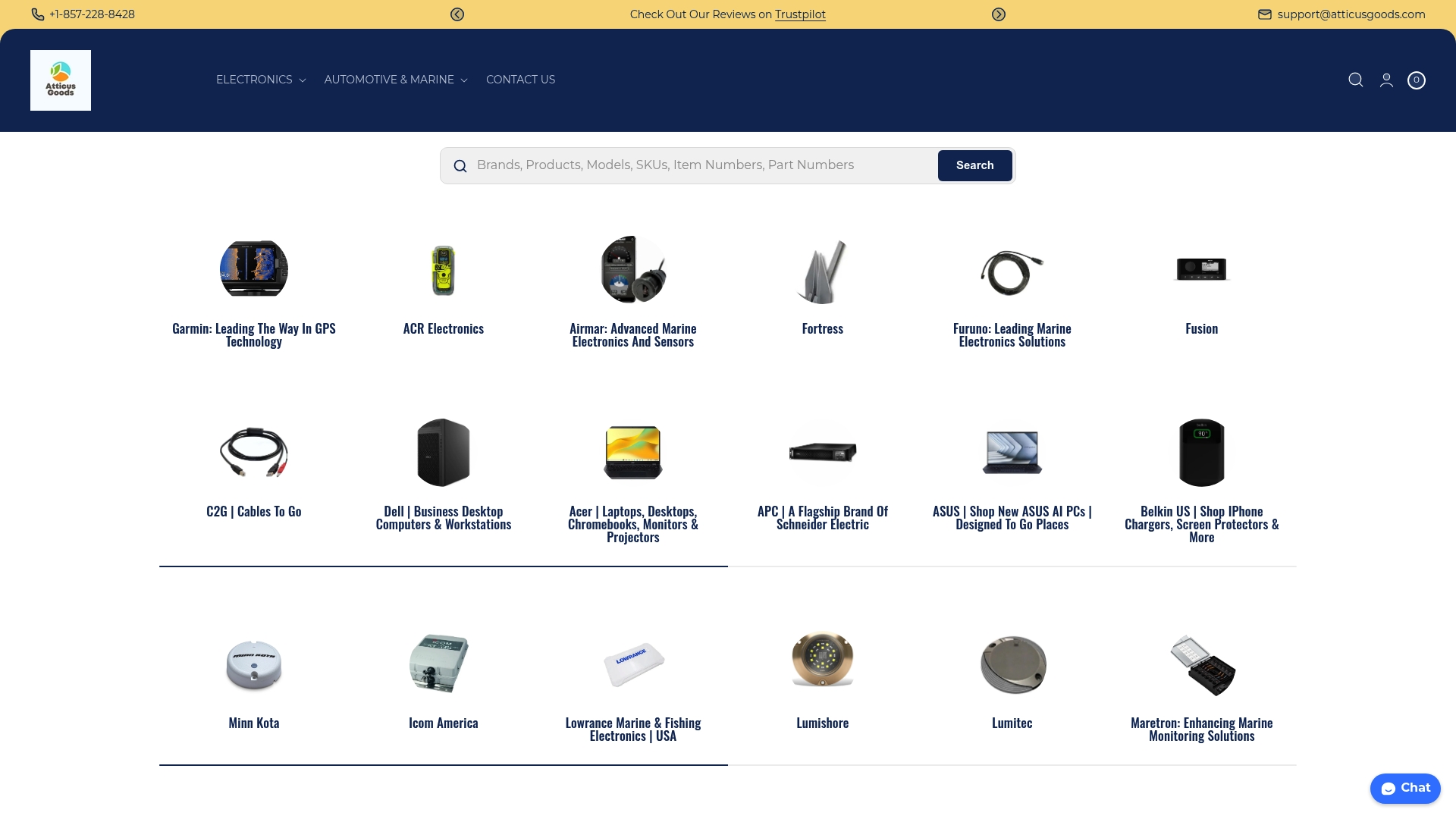
Before you check out anywhere, run through the same short list this guide covered: confirm the shipping window, check who backs the warranty, and know the return policy before you commit. When you’re ready, browse the electronics and related categories at Atticus Goods directly to see current in-stock availability.
Sources
- Should You Buy Refurbished Electronics? - Consumer Reports
- How to Buy Refurbished Electronics - WIRED
- INFORM Consumers Act guidance - Federal Trade Commission
FAQ
What is a good substitute for Amazon for electronics?
Atticus Goods works well as a direct substitute, with a stated catalog of over 250,000 in-stock products across electronics and related categories plus a next-day shipping claim. For specific niches, Best Buy suits in-person support, eBay suits used or collectible finds, and Costco suits buyers who prioritize generous return terms.
Who is considered a top competitor to Amazon in electronics?
Walmart and Best Buy are generally viewed as the largest competitors for electronics specifically, given their combined online and in-store footprint. eBay also competes closely for used, refurbished, and hard-to-find items through its certified refurbished programs.
How do I stop relying on Amazon for electronics purchases?
Start by identifying which retailer covers your most common purchase type, whether that’s a broad in-stock catalog, in-person support, or refurbished specialists. Checking seller disclosures required under the INFORM Consumers Act and paying by credit card, as the FTC recommends, helps you shop safely on any new platform.
What site is typically cheaper than Amazon for electronics?
Pricing varies by item and promotion rather than staying consistently lower on any one site. Alibaba tends to offer lower per-unit pricing for bulk or component purchases, while Walmart and Target run frequent promotional pricing on everyday consumer electronics.