

Marine electrical systems are the integrated networks of AC and DC components, wiring, protection devices, and controls that deliver safe, reliable power aboard any vessel. Without a properly designed and maintained system, everything from navigation lights to bilge pumps to engine starting becomes unreliable. The American Boat and Yacht Council (ABYC) and the U.S. Coast Guard (USCG) set the standards that govern how these systems must be built and maintained. Understanding those standards, and the hardware behind them, is the difference between a boat that works and one that becomes a liability on the water.
What are the main components of a marine electrical system?
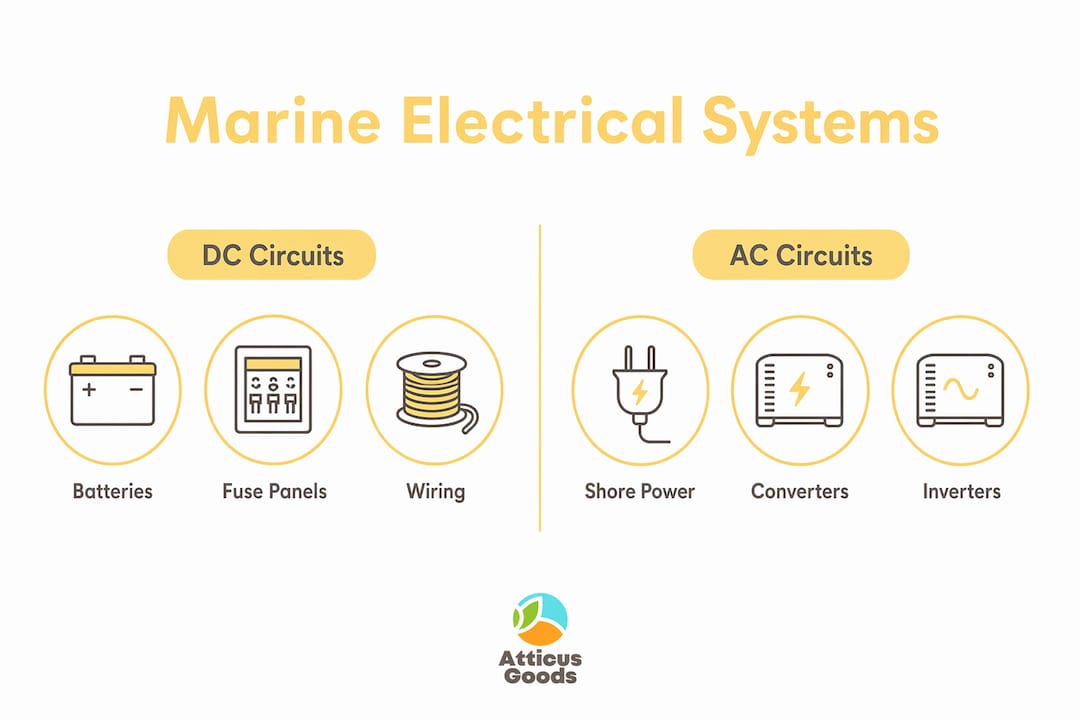
Every boat’s electrical infrastructure divides into two primary circuits: DC (direct current) and AC (alternating current). DC systems, typically 12V or 24V, handle most onboard loads including navigation, lighting, and engine starting. AC systems, usually 120V shore power, run larger appliances like air conditioning and battery chargers. Both circuits must coexist safely, which is why proper design matters from the start.
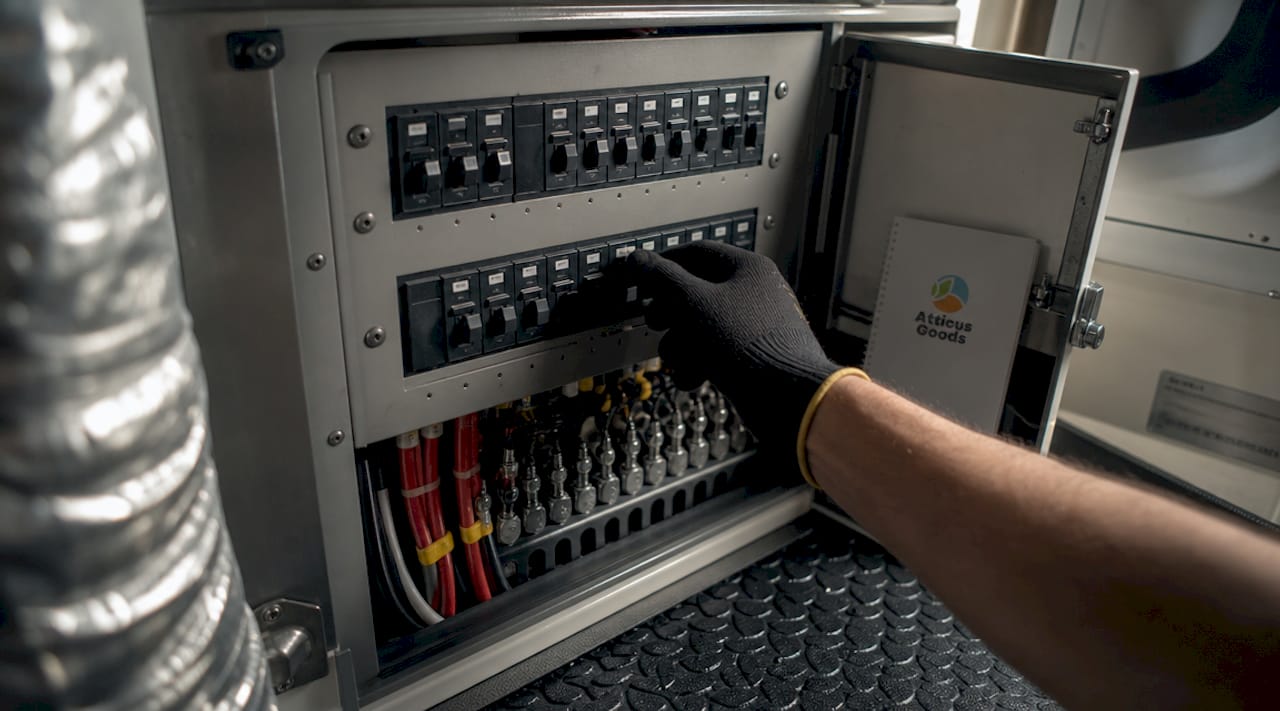
The battery bank sits at the center of any DC setup. Most boats run at least two battery types: a starting battery dedicated to engine cranking and a house battery bank that powers all other loads. AGM (Absorbent Glass Mat) and lithium iron phosphate (LiFePO4) batteries have largely replaced flooded lead-acid units on newer builds because of their lower maintenance demands and higher cycle counts.
Charging sources feed those batteries through several paths:
- Engine alternator: Provides bulk charging while underway, typically 50A to 200A depending on engine size
- Shore power battery charger: Charges the bank when plugged into a marina pedestal
- Inverter-charger (e.g., Victron MultiPlus, Xantrex Freedom): Combines AC inversion and battery charging in one unit
- Solar panels and wind generators: Supplemental renewable sources increasingly common on cruising boats
The DC distribution panel is where power gets routed to individual circuits. A quality panel from manufacturers like Blue Sea Systems or Paneltronics includes labeled circuit breakers, LED indicators, and proper bus bar arrangements. Shore power connections require an AC inlet, main breaker, and a galvanic isolator to block stray DC currents that cause underwater metal corrosion. Marine-grade components including circuit breakers and enclosures are specifically designed for the saltwater and vibration environment that destroys standard hardware quickly.
How do marine electrical wiring standards and safety practices protect vessels?
Marine wiring must be tinned, stranded, UL 1426-certified copper to survive the salt air, moisture, and vibration that boats endure. This is not a preference. Automotive SAE wire is thinner than AWG marine cable by approximately 12%, which creates dangerous undersizing when used in marine applications. Substituting automotive wire for marine wire is one of the most common and most hazardous shortcuts found on older or DIY-wired boats.
Cable sizing follows ABYC E-11, which sets voltage drop limits based on circuit criticality. Critical circuits like navigation lights and bilge pumps are limited to 3% voltage drop, while cabin lighting and accessories allow up to 10%. These limits exist because a bilge pump drawing more voltage drop than allowed may fail to run at full capacity precisely when you need it most.
Pro Tip: Always calculate voltage drop before purchasing wire. Use the ABYC E-11 tables or an online marine wire sizing calculator. Buying one gauge heavier than the minimum calculation costs very little and provides a meaningful safety margin.
Overcurrent protection placement is equally critical. ABYC E-11 requires a main fuse, typically a Class T fuse, within 7 inches of the battery positive terminal. This protects the entire run of unprotected wire between the battery and the panel. A common retrofitting violation involves installing breakers sized to the load rather than the conductor. Overcurrent devices must protect the conductor for its rated ampacity, not just the device it feeds. An undersized wire with an oversized breaker will melt before the breaker trips.
The following wiring pitfalls cause the majority of onboard electrical failures and fires:
- Using non-tinned or automotive wire in bilge or engine spaces
- Routing positive and negative conductors through separate conduits, which increases inductance and interference
- Terminating wires with crimp connectors not rated for marine use
- Skipping heat shrink on all terminals in wet or spray-prone areas
- Poor negative bus management where negative returns connect to random chassis points instead of a common bus
The table below summarizes key ABYC E-11 requirements every boater should know:
| Requirement | Standard |
|---|---|
| Wire type | Tinned, stranded, UL 1426-certified copper |
| Main fuse placement | Within 7 inches of battery positive terminal |
| Critical circuit voltage drop | 3% maximum (navigation, bilge pumps) |
| Accessory circuit voltage drop | 10% maximum (cabin lighting, accessories) |
| Negative bus | Common bus separate from chassis or engine ground |
How have modern technologies changed marine electrical design?
Modern marine electrical systems are shifting from analog mechanical switching to digital switching, and the practical impact on boats is significant. Digital switching systems (DSS), such as those from Garmin OneHelm or Carling Technologies, replace traditional toggle switches and heavy copper runs with low-current data signals and software-controlled relays. The result is less wire weight, cleaner installations, and the ability to automate functions like load shedding when battery voltage drops below a set threshold.
NMEA 2000 networking has become the standard communication backbone on modern vessels. It allows chart plotters, VHF radios, engine monitors, and battery management systems to share data over a single bus. A Victron Cerbo GX or Maretron N2KView display can show real-time battery state of charge, alternator output, and individual circuit loads from one screen. This level of visibility was simply not available on boats built before the mid-2000s.
The comparison below shows how traditional and digital switching architectures differ in practice:
| Feature | Traditional wiring | Digital switching |
|---|---|---|
| Wire weight | Heavy copper runs to every switch | Low-current data cables only |
| Automation | Manual only | Load shedding, timers, alerts |
| Diagnostics | Visual inspection required | Software-readable fault codes |
| Installation complexity | High (physical routing) | Moderate (programming required) |
| Failure mode | Physical wire or switch failure | Software or module fault |
Electric propulsion adds another layer of complexity. High-voltage electric drive systems require isolated grounding to prevent stray current corrosion and shock hazards, governed by ABYC E-30. A 48V or 96V propulsion system on a sailboat like a Beneteau or a Catalina retrofit demands a completely separate high-voltage circuit with dedicated overcurrent protection and monitoring. Galvanic isolators block low-voltage DC stray currents in the shore power grounding conductor, protecting underwater metals like bronze through-hulls and propeller shafts from accelerated corrosion.
Pro Tip: If you are adding NMEA 2000 devices to an existing boat, map the entire network before adding nodes. Overloaded NMEA 2000 backbones cause intermittent data dropouts that are extremely difficult to diagnose after the fact.
What are best practices for maintaining and troubleshooting boat wiring?
Marine electrical fires are mainly caused by undersized wiring, corrosion, and overloaded circuits that degrade slowly before failing catastrophically. The good news is that most of these failures are preventable with a consistent inspection routine. Every boater should perform a full electrical inspection at least once per season, and after any major storm or grounding event.
Follow this inspection sequence each season:
- Visual check of all wire runs for chafe, heat discoloration, or cracked insulation, paying special attention to areas near engine mounts and bilge spaces
- Test every breaker and fuse by cycling them under load to confirm they trip and reset correctly
- Check all terminal connections for green or white corrosion, loose crimps, or signs of arcing
- Measure voltage drop on critical circuits under load using a digital multimeter; document the readings for comparison next season
- Inspect the battery bank for swelling, terminal corrosion, and electrolyte levels if using flooded batteries
Labeling circuits and recording voltage drops are habits that pay off immediately when something stops working at 11 PM in an anchorage. A simple laminated wiring diagram stored near the panel saves hours of troubleshooting. When upgrading components, always match or exceed the original wire gauge and use only marine-rated connectors, breakers, and fuses.
Common troubleshooting scenarios and their most likely causes:
- Circuit works intermittently: Loose or corroded terminal connection at the panel or the device
- Breaker trips repeatedly: Circuit is overloaded or there is a partial short in the wiring run
- Battery drains overnight: Parasitic draw from a device left on or a faulty diode in the alternator
- Bilge pump runs but moves little water: Voltage drop exceeding 3% on the pump circuit, usually from undersized wire or corroded connections
- Shore power trips GFCI immediately: Moisture in an AC outlet or a fault in the shore power cord
When sourcing replacement parts, prioritize compliant marine electrical hardware over generic hardware store substitutes. The cost difference is small. The safety difference is not.
Key takeaways
A properly designed marine electrical system built to ABYC E-11 standards, using tinned UL 1426-certified wire and correctly placed overcurrent protection, is the single most effective way to prevent onboard electrical fires and failures.
| Point | Details |
|---|---|
| Wire type matters critically | Use only tinned, stranded, UL 1426-certified copper wire. Automotive wire corrodes and undersizes dangerously. |
| Overcurrent protection placement | Place a Class T fuse within 7 inches of the battery positive terminal per ABYC E-11. |
| Voltage drop limits by circuit | Critical circuits (bilge pumps, navigation) must stay within 3% drop; accessories within 10%. |
| Digital switching changes the game | DSS reduces wire weight and enables automation but requires software diagnostic skills to maintain. |
| Seasonal inspection prevents fires | Check for corrosion, chafe, and voltage drop annually. Document readings for trend comparison. |
Why I stopped trusting “good enough” on boat wiring
After spending years reviewing electrical systems on everything from 22-foot runabouts to 50-foot offshore cruisers, the pattern I see most often is not ignorance. It is rationalization. Owners see a wire that looks fine and assume it is fine. They install a breaker that is close to the right size and move on. They skip the galvanic isolator because the marina seems clean. These are the boats that show up with melted panels and corroded through-hulls.
The shift to digital switching is genuinely exciting, and I think it represents the right direction for the industry. But I have watched experienced electricians struggle to diagnose a DSS fault because they were trained on physical circuits. The skill set is different. If you are adding a Garmin OneHelm or a Carling digital switching module to your boat, invest time in learning the software side before you need it at sea.
The one piece of advice I give every boater who asks about electrical upgrades: buy the right wire first. Everything else is secondary. Tinned marine wire from a reputable supplier costs more than the roll at the hardware store, but it is the foundation every other component depends on. Cutting that corner is the most expensive mistake you can make on a boat.
The proactive lifecycle management mindset that commercial vessel operators use belongs on recreational boats too. Treat your electrical system like the safety-critical infrastructure it is, and it will reward you with years of reliable service.
— Matthew Vista
Get the right marine electrical supplies from Atticus Goods
Atticus Goods stocks a broad selection of marine electrical supplies including tinned marine wire, circuit breakers, bus bars, galvanic isolators, battery chargers, and digital switching components from trusted brands. With over 35,000 in-stock products and next-day shipping across the United States, Atticus Goods is the practical choice for boaters who need the right part fast. Whether you are rewiring a panel, upgrading to a lithium battery bank, or sourcing NMEA 2000-compatible hardware, the catalog covers recreational and light commercial needs. Browse the full marine electronics and boating accessories selection at Atticus Goods and find compliant components that meet ABYC standards without the markup of a specialty marine dealer.
FAQ
What is a marine electrical system?
A marine electrical system is the integrated network of DC and AC circuits, batteries, wiring, protection devices, and controls that power all onboard equipment. It must meet ABYC and USCG standards to operate safely in the marine environment.
Why can’t I use regular automotive wire on my boat?
Automotive SAE wire is approximately 12% thinner than AWG marine cable and lacks tinning, which causes rapid corrosion in salt air. Using it creates dangerous undersizing and early insulation failure that can lead to fires.
What does ABYC E-11 require for overcurrent protection?
ABYC E-11 requires a main overcurrent protection device, typically a Class T fuse, placed within 7 inches of the battery positive terminal. Breakers must be sized to protect the conductor’s ampacity, not just the connected load.
How do I troubleshoot an intermittent circuit on my boat?
Start at the panel terminal and work toward the device, checking every connection for corrosion or looseness. Intermittent failures are almost always caused by a high-resistance connection rather than a failed component.
What is a galvanic isolator and do I need one?
A galvanic isolator blocks low-voltage DC stray currents that travel through the shore power grounding conductor and accelerate corrosion on underwater metals. Any boat that regularly connects to shore power benefits from one.