

A complete kayak electronics accessory list is the foundation of any well-rigged paddling or fishing setup. The right gear covers four core categories: reliable power, sonar, mounting hardware, and safety communication. Devices like Lithium Iron Phosphate batteries, Garmin Striker fish finders, RAM mounts, and waterproof VHF radios each serve a specific role on the water. Skip one category and your entire setup becomes less dependable. This guide covers every item a kayak angler or recreational paddler needs to build a safe, functional, and durable electronics rig in 2026.
1. What are the must-have power sources for kayak electronics?
LiFePO4 batteries are the preferred power source for kayak electronics in 2026. They weigh significantly less than sealed lead-acid batteries and deliver stable voltage from full charge down to near depletion. That voltage consistency matters because fish finders and GPS units perform poorly when voltage drops mid-trip.
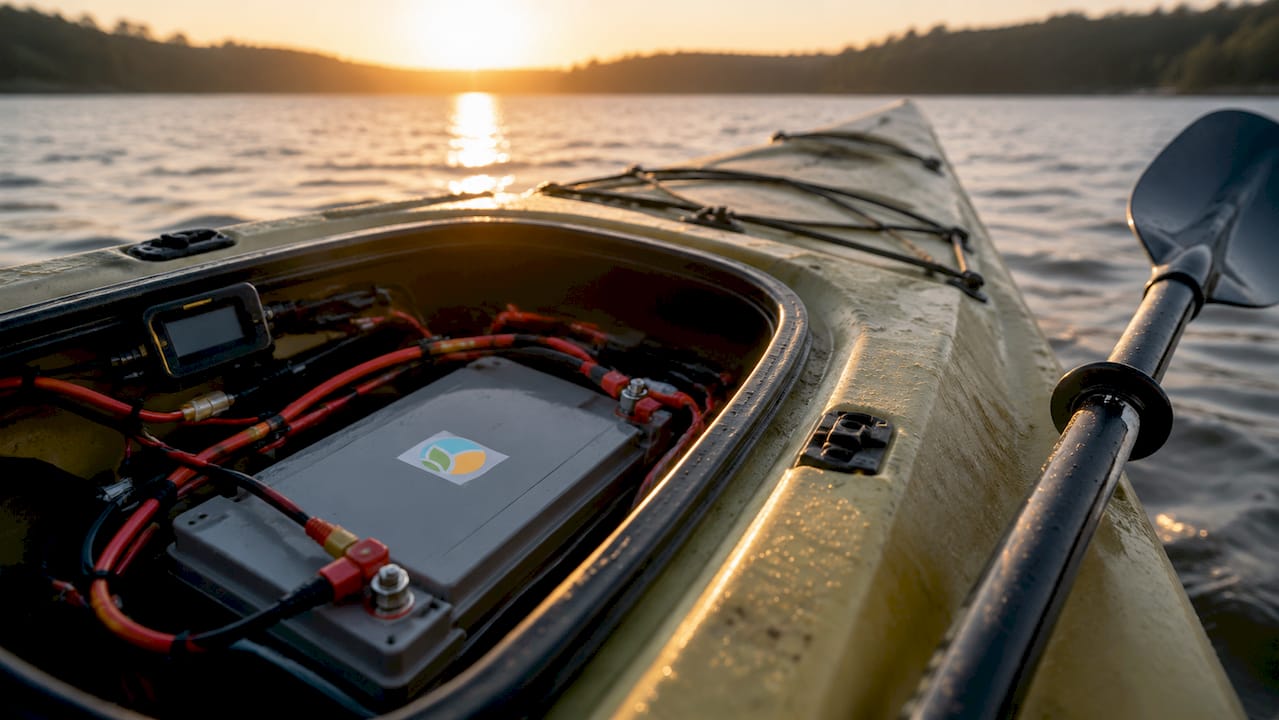
For a full day on the water, a 10Ah to 20Ah capacity covers most setups. A 10Ah battery handles a single fish finder and a VHF radio comfortably. Step up to 20Ah if you run a trolling motor controller, lighting, or multiple devices simultaneously.
Power management hardware is just as critical as the battery itself. Key components include:
- Waterproof battery enclosure: Protects the battery from splash and submersion. Hard plastic cases with rubber gaskets work best.
- Marine-grade fuse block: Distributes power to multiple devices without splicing wires together. Each circuit gets its own fuse.
- Inline fuse on the positive lead: A 3A to 5A fuse on the positive wire protects each device individually from shorts and power surges.
- Ring terminals and heat-shrink connectors: Prevent corrosion at every connection point.
Pro Tip: Never run bare wire connections in a kayak. Salt water and humidity corrode unprotected copper fast. Use marine-grade tinned wire and seal every connection with adhesive-lined heat shrink.
2. Which fish finder models are best for kayak use?
The Garmin Striker series is the most recommended fish finder line for kayak setups. The Striker 4 costs under $150 and delivers reliable sonar performance for entry-level anglers. The Striker Vivid 5cv and 7cv add color displays and ClearVü scanning sonar at a mid-range price point.
Standalone fish finders outperform smartphone-tethered units on kayaks. Standalone units keep your phone dry and preserve its battery for emergencies. A phone-dependent sonar puck is a liability when you need your phone most.
Screen performance matters more than screen size on a kayak. Glare resistance and glove-friendly keypads are the two features that separate functional units from frustrating ones. A touchscreen that stops responding when wet is useless in rain or spray.
| Feature | Entry-Level (Striker 4) | Mid-Range (Striker Vivid 7cv) |
|---|---|---|
| Price range | Under $150 | $200–$300 |
| Display | Grayscale | Color |
| Sonar type | 2D CHIRP | 2D CHIRP + ClearVü |
| Screen size | 3.5 inches | 7 inches |
| Best for | Budget anglers | Serious kayak fishing |
Key features to prioritize when choosing a kayak fish finder:
- Glare-resistant display for bright sunlight conditions
- Physical button interface or glove-compatible touchscreen
- Built-in GPS for marking waypoints and tracking routes
- CHIRP sonar for cleaner target separation at depth
- Compact form factor that fits standard kayak mounts
3. What are the best mounting systems for kayak electronics?
Mounting systems are the part of a kayak device setup that most paddlers underestimate. A loose fish finder vibrates out of position, loses sonar contact, and eventually fails from repeated shock. The right mount keeps every device locked in place through rough water and paddle strokes.
Kayak anglers consistently combine Scotty mounts for rod holders and RAM mounts for electronics. Scotty mounts use durable plastic swivel bases that hold rod holders and accessories at an affordable price. RAM mounts use rubber ball-and-socket joints that absorb vibration and allow precise repositioning without tools.
Gear track systems take mounting flexibility further. YakAttack GearTrac and Scotty Slide Track systems let you slide and reposition mounts along a rail without drilling new holes. Compatible gear track systems allow full customization as your setup evolves. That matters when you add a new device mid-season and need to rearrange your layout.
Installation tips worth following:
- Use through-bolt mounts on high-vibration areas like the bow. Adhesive mounts work for lighter accessories in protected spots.
- Apply marine sealant around every drilled hole to prevent water intrusion into the hull.
- Position fish finder displays within easy sightline from your seated paddling position.
- Keep mounts low and centered to avoid shifting your kayak’s center of gravity.
Pro Tip: Use RAM mounts for your fish finder and GPS, and Scotty mounts for rod holders and accessory arms. You get vibration protection where it counts and save money where it doesn’t.
4. Which communication and safety electronics should every kayaker carry?
Safety electronics are the most overlooked category on any kayak gear essentials list. A fish finder tells you where the fish are. A VHF radio and satellite messenger tell rescuers where you are.
Waterproof VHF radios are the standard for on-water group communication. They broadcast on Channel 16, the universal distress frequency monitored by the Coast Guard. Every paddler in a group should carry one. They work without cell coverage, which makes them far more reliable than texting in remote areas.
The Garmin InReach Mini 2 is the leading satellite messenger for solo and remote kayakers. It sends GPS coordinates and two-way text messages via satellite, independent of any cell network. For solo paddlers on open water or wilderness rivers, it is a non-negotiable piece of kit.
A satellite messenger does not replace a VHF radio. VHF handles real-time group coordination. A satellite messenger handles emergencies when no one else is within radio range.
Additional safety electronics and accessories to carry:
- Waterproof phone case: Keeps your phone dry and functional as a backup navigation device.
- Navigation lights: Required by law for paddling after dark. LED bow and stern lights mount easily to gear tracks.
- Tethered whistle: Not electronic, but required safety gear that complements your electronic kit.
- Waterproof Bluetooth speaker: The Ultimate Ears MEGABOOM 4 floats and delivers 20 hours of battery life, making it a practical audio option for longer trips.
5. How to assemble your kayak electronics setup for efficiency and reliability
Improper wiring causes most kayak electronics failures. The fix is not complicated. It requires marine-grade components and a logical wiring plan before you drill a single hole.
Follow this assembly sequence for a clean, reliable rig:
- Plan your layout first. Place all devices in their intended positions before mounting anything. Confirm cable lengths reach your battery location without pulling tight.
- Mount the battery enclosure. Secure it low in the hull near the center for weight balance. Use hook-and-loop straps or a dedicated battery tray.
- Install the fuse block. Mount it close to the battery. Run a short, fused positive lead from the battery to the fuse block. Each device gets its own circuit.
- Run marine-grade duplex wiring. Route cables through the kayak’s interior channels or along the hull using cable clips. Keep wires away from moving parts and paddle contact zones.
- Connect and seal all terminals. Use ring terminals crimped with a ratcheting crimper. Cover every connection with adhesive-lined heat shrink before powering up.
- Mount and seal the transducer. Air bubbles between the transducer and hull destroy sonar performance. Use marine duct seal or epoxy to create a solid, bubble-free bond.
Pro Tip: Label every wire at both ends with a small piece of tape before routing it through the hull. Troubleshooting a wiring issue on the water is much faster when you can identify each circuit at a glance.
For a deeper look at safe marine wiring methods, the marine wiring safety guide at Atticus Goods covers connector types, fuse sizing, and corrosion prevention in detail.
Key takeaways
A complete kayak electronics setup requires reliable power, a quality standalone fish finder, vibration-resistant mounts, and dedicated safety communication devices working together.
| Point | Details |
|---|---|
| Use LiFePO4 batteries | A 10Ah to 20Ah LiFePO4 battery delivers stable voltage and saves significant weight over lead-acid. |
| Choose standalone fish finders | Garmin Striker units keep your phone dry and provide dedicated sonar without draining phone battery. |
| Combine RAM and Scotty mounts | Use RAM mounts for electronics and Scotty mounts for rod holders to balance performance and cost. |
| Carry a VHF radio and satellite messenger | VHF covers group coordination; a Garmin InReach Mini 2 covers emergencies beyond cell range. |
| Wire with marine-grade components | A fuse block, tinned wire, and heat-shrink connectors prevent the corrosion failures that end trips early. |
What I’ve learned after years of rigging kayaks
The most common mistake I see is paddlers chasing complexity before they have the basics dialed in. Someone buys a side-imaging sonar unit before they have a reliable battery and a proper mount. The result is a $400 fish finder that vibrates loose, loses signal, and drains a battery that was never sized for the load.
My honest recommendation is to build your setup in layers. Start with a solid LiFePO4 battery, a fuse block, and a Garmin Striker 4. Get that working cleanly before adding anything else. A simple setup you understand beats a complicated one you are constantly troubleshooting.
The mount combination I keep coming back to is RAM mounts for every electronic device and Scotty mounts for rod holders and accessory arms. RAM’s rubber ball joints absorb paddle vibration better than anything else I have tested. Scotty’s plastic swivel bases are tough enough for rod holders and cost far less than RAM equivalents.
Safety electronics get skipped because they feel like insurance. Nobody wants to spend money on gear they hope to never use. But a waterproof VHF radio and a Garmin InReach Mini 2 are the two items I would never leave the dock without. The fish finder finds fish. Those two devices bring you home.
Inspect your battery terminals and wiring connections before every season. Corrosion builds up faster than you expect, especially if you paddle in salt or brackish water. Catching a corroded terminal at home costs you ten minutes. Catching it on the water costs you the whole trip.
— Matthew Vista
Shop kayak electronics accessories at Atticus Goods
Atticus Goods carries the marine electronics, batteries, mounts, and wiring accessories you need to build a reliable kayak setup from the ground up.
From LiFePO4 batteries and marine-grade fuse blocks to waterproof communication devices and mounting hardware, the Atticus Goods store stocks over 35,000 products with next-day shipping across the United States. Whether you are rigging your first kayak or upgrading an existing setup, you will find trusted brands at competitive prices. Browse the full catalog and get your gear delivered fast so you can spend more time on the water.
FAQ
What batteries work best for kayak electronics?
LiFePO4 batteries in the 10Ah to 20Ah range are the top choice for kayak electronics. They are lighter than lead-acid batteries and maintain stable voltage throughout the discharge cycle.
Are standalone fish finders better than phone-based units?
Standalone fish finders are more reliable on kayaks. Phone-dependent sonar units drain your phone battery and expose it to water damage, leaving you without a backup communication device.
What is the best entry-level fish finder for a kayak?
The Garmin Striker 4 is the top entry-level choice. It costs under $150, uses CHIRP sonar, and mounts easily to standard RAM or Scotty hardware.
Do I need a satellite messenger if I already have a VHF radio?
Yes. A VHF radio handles real-time communication with nearby boaters and the Coast Guard. A satellite messenger like the Garmin InReach Mini 2 sends your GPS location when you are beyond radio range or cell coverage.
How do I prevent wiring failures on my kayak?
Use a marine-grade fuse block to distribute power, run tinned duplex wire, and seal every terminal connection with adhesive-lined heat shrink. Inspect all connections at the start of each season.