

For the best electronics deals right now, start with TVs, laptops, audio, smart home gear and gaming, and shop where in-stock items ship fast. We recommend checking our electronics collection first, since a markdown only helps if the product is available and arrives quickly. Prices change often, so treat this roundup as a snapshot of live opportunities.
TL;DR:
- October retailer events favor TVs, laptops, and headphones, while Prime and Big Deal Days tend to suit phones, earbuds, and streaming devices.
- Use price history trackers to reject fake markdowns, then combine store coupons, promo codes, cash back cards, and manufacturer gift cards when checkout terms allow.
- Before paying, compare the exact model across retailers and include shipping, tax, and membership costs; check the warranty, return window, and stock status.
- If the current price is close to your verified low, buy rather than wait for a marginal drop when the item has limited stock.
Table of Contents
- Which electronics categories have the best deals right now?
- Which products are worth grabbing on sale?
- When should you buy electronics in 2026?
- How can you save more than the sticker discount?
- What should you check before buying a discounted item?
- Why should you subscribe to deal newsletters and alerts?
- How do you read deal terms, exclusions and stock limits?
- How do you buy limited-quantity and flash sale items before they sell out?
- How do you compare deal prices across retailers?
- How do specifications and reviews help you avoid low-quality deals?
- How do you find and verify live deals?
- What we look for when we curate live deals
- Shop in-stock electronics deals with next-day shipping
- FAQ
- Sources
Which electronics categories have the best deals right now?
Not every category discounts on the same schedule, so your attention is best spent where prices move the most. Here is where we see the biggest, most repeatable cuts.
- TVs: Deep markdowns cluster around October retailer events and manufacturer promotions. Recent-model OLED and mini-LED sets often come with gift-card or cash-back bundles on top of the straight price cut.
- Laptops: Seasonal refreshes push last-generation MacBooks and Windows ultrabooks down in price. A previous-generation model can be the sweet spot, because the performance gap is small and the savings are large.
- Audio: Headphones and earbuds see steep cuts during retailer events and Amazon promotions. Premium earbuds drop the most, so this is a good time to upgrade.
- Smart home: Lighting, plugs and security cameras tend to move in flash sales and manufacturer deal days. Starter kits and multi-packs often beat single-item pricing.
- Gaming and accessories: Consoles, controllers and peripherals get bundles and occasional open-box pricing. Controllers are a cheap way to get in on a sale.
The pattern is simple: categories with frequent model refreshes and heavy retailer competition give you the most room to save. Categories with slower product cycles, like cables or basic chargers, rarely see dramatic cuts, though they are easy to bundle into a bigger order for shipping efficiency.
If you want to see how a broad in-stock catalog changes the shopping experience, our guide on in-stock online electronics stores explains why availability matters as much as the sticker price.
Which products are worth grabbing on sale?
Here are concrete picks to compare against whatever price you are seeing. We lean toward items that are easy to find in stock and ship quickly, not just the lowest number on a page.
- Anker Nano portable USB-C charger: A pocket-size power bank that is a common add-on item in bundle sales. Best for commuters and travelers who want a backup charge without bulk.
- PlayStation DualSense Controller: Controllers regularly get cut during gaming promotions and holiday bundles. Best for a second player or a replacement pad.
- PlayStation DualSense Edge Controller: The premium, customizable version, which is where a discount saves the most real money. Best for competitive players who want remappable buttons.
- Victrola Journey+ cassette Bluetooth suitcase turntable: A portable record player that tends to appear in seasonal gift promotions. Best for gift buyers and anyone who wants a casual vinyl setup.
- Samsung Galaxy S21: An older flagship that becomes a bargain as newer models launch. Best for budget buyers who want a capable Android phone.
- iPhone 14: A prior-generation iPhone that gets cheaper whenever Apple and carriers push the newest lineup. Best for people who want iOS without paying for the latest model.
- Dell XPS 13: A thin ultrabook that discounts around back-to-school and October events. Best for students and mobile professionals.
- HP Pavilion 15: A mainstream laptop that is frequently marked down at retailer events. Best for everyday home use on a tight budget.
- Philips Hue Smart Lighting System: Starter kits are the usual sale target. Best for first-time smart home buyers who want an easy entry point.
- Dyson V8 Cordless Vacuum Cleaner: An older model that often drops in price when newer Dysons arrive. Best for apartments and small homes.
For a sense of how steep a TV cut can get, TechRadar’s Best Buy Techtober coverage reported that the LG C6 65-inch OLED TV was $1,499.99, down from $2,699.99, a reminder that flagship TVs carry the largest dollar savings in any given sale.
Keep the time window in mind. Promotions like these run for limited stretches, and prices listed in event coverage can change or sell out without notice.
When should you buy electronics in 2026?
Timing decides whether you pay a fair price or a great one. Here is how the main windows tend to play out.
- Prime and Big Deal Days: Amazon’s fall event covers phones, headphones and streaming devices. The Verge’s October coverage listed Samsung Galaxy S26 Ultra at $950, AirPods Pro 3 at $179, and discounts on Roku streaming gear, a good snapshot of what these events favor.
- Techtober and retailer events: Best Buy’s October sale leans toward TVs, laptops, headphones and major appliances. If a big-ticket screen is on your list, this is a strong window.
- Labor Day: Expect solid cuts on laptops and home gear, though the best picks sell out early.
- Black Friday and Cyber Monday: The widest selection of deals lands here. Wait for it if your purchase is not urgent and the item is a common doorbuster category. Buy now if you need the product soon or if stock on a specific model is thin.
A useful rule: if a current price is within a small margin of the lowest you have seen, buy it. Waiting for a slightly better price risks losing the item entirely, which is the more expensive mistake.
How can you save more than the sticker discount?
The advertised price is only the starting point. These steps stack extra savings on top of it.
- Stack in the right order. Apply the store coupon first, then a promo code if the checkout allows it, then pay with a card that earns cash back. Many stores limit how many codes combine, so test at checkout before assuming it works. Our walkthrough on how to stack discount codes on electronics covers the common limits.
- Use price trackers and alerts. A tracker shows the price history, so you can spot a fake “sale” that is really the normal price.
- Consider refurbished or open-box. Certified refurbished items are a reliable way to save on laptops and phones, as long as you confirm the warranty and return window first.
- Check for rebates and gift cards. Manufacturers often add mail-in rebates or gift-card offers that are separate from the store discount.
Pro Tip: Combine a manufacturer gift-card offer with a store discount and a cash-back card. The gift card effectively lowers the next purchase, so the real saving is larger than any single banner suggests.
What should you check before buying a discounted item?
Flash deals move fast, which is exactly when mistakes happen. Run through this short list before you pay.
- Return window: Confirm how many days you have and whether there is a restocking fee on opened electronics.
- Warranty: Check that the manufacturer warranty applies to you as the buyer, not only to the original seller.
- Exact model: Verify the model number, and the serial number where relevant, so you get the generation you wanted. Our list of common TV buying mistakes shows how easily similar model names get mixed up.
- Included accessories: Make sure the remote, cables or charger are in the box.
- Shipping speed: A great price is worthless if the order arrives after the promotion ends or the item sells out. That is why we ship in-stock items next day across the U.S.
Why should you subscribe to deal newsletters and alerts?
The best deals reward people who hear about them first. Strong offers on popular items can disappear within hours, and by the time a deal reaches a social feed, the cheapest units may already be gone.
Trusted deal sites send newsletters and push alerts that flag price drops as they happen. Pick two or three sources you trust and skip the rest, because a flooded inbox trains you to ignore everything. Set alerts for the specific products on your list, such as a laptop model or a TV size, so you only get pinged when something relevant moves.
Retailer alerts matter too. They can help you hear about electronics markdowns and clearance items. Pair that with a price tracker on a product page, and you have two independent signals that a price is real.
A few habits make alerts work better. Use a separate email address for deal newsletters so they never bury important mail. Check the alert’s timestamp before you rush, since an old notification may point to an expired price. And when an alert lands, verify it against a second source before buying, which leads directly to the next point about reading deal terms.
How do you read deal terms, exclusions and stock limits?
The headline discount is rarely the whole story. Fine print decides whether the price applies to you.
Look for exclusions first. Many promotions exclude certain brands, bundles, or already-reduced clearance items.
Next, check the dates and the quantity language. Phrases like “while supplies last” or “limit one per customer” mean the offer can end before the listed date. Gift-card and cash-back incentives often run through specific promotion windows that differ from the price cut itself. 9to5Toys noted this in its coverage of LG Deal Days, where large straight discounts on select OLED and mini-LED TVs came with additional gift-card or cash-back incentives tied to limited windows.
Finally, confirm how the bonus is delivered. A gift card that arrives weeks later, or a rebate that requires a mail-in form, is worth less than instant money off. Factor that delay and effort into the real price.
When terms are unclear, screenshot the offer page before you buy. If a dispute comes up, you will have proof of what was advertised.
How do you buy limited-quantity and flash sale items before they sell out?
Speed and preparation beat luck. Most people lose a flash deal not at the product page but at checkout, while typing in an address or hunting for a card.
Prepare ahead. Save your shipping address and payment method in your account, log in before the sale starts, and keep the product page open in a tab. Know your target price in advance so you can decide in seconds instead of minutes.

Add the item to your cart as soon as it is available. Carts do not always hold stock, but being in the checkout flow still saves time. If a site offers a faster checkout option you have already set up, use it.
Have a backup. Flash inventory is often a small batch, so identify a second, similar product at a comparable price. If your first choice vanishes, you can switch without starting your research over.
Choose sellers who can ship quickly. A deal on an item that is out of stock at the warehouse tends to get canceled later, which wastes your time. Retailers that hold deep in-stock inventory and ship next day lower that risk, which is part of why availability drives our own recommendations.
Last, avoid panic buying. A real deal on the wrong model is still a bad purchase, so keep the model number in front of you as you click.
How do you compare deal prices across retailers?
The same product can carry very different prices on the same afternoon, so a quick comparison pays for itself. A discount percentage means little without knowing the list price it was measured against.
Start with the exact model number and search it across three or four major retailers. Compare the final price, not the banner. Add shipping, tax, and any membership requirement, since a low price that needs a paid subscription is not really low for everyone.
Then compare what the price includes. One listing may bundle a warranty, a charger, or a gift card, while another sells the bare item. Event coverage helps you calibrate. Tom’s Guide reported that Amazon’s October Apple sale took up to $500 off MacBooks, with Apple Watch SE 3 at $199, which gives you a benchmark when you are weighing an Apple price elsewhere.
Remember that price matching exists at some stores. If a competitor is cheaper, ask whether the retailer will match it, and read the conditions first, because many exclude limited-time doorbusters.
Keep a simple note of the lowest verified price you find for each item. That number becomes your target and keeps a flashy banner from talking you into an average deal.
How do specifications and reviews help you avoid low-quality deals?
A deep discount can hide a weak product. Some “deals” are older or stripped-down models built specifically to hit a low price point, so check what you are actually getting.
Read the spec sheet for the details that matter in that category. For a TV, look at panel type, refresh rate and brightness. For a laptop, check the processor generation, memory, storage, and display quality. Two laptops with similar names can differ sharply in how fast they feel.
Then read reviews with a critical eye. Look for patterns across several sources rather than a single glowing rating. Pay attention to long-term complaints about battery life, build quality or software, which only show up after months of use. Discount-only models sometimes have reviews that describe a different version than the one on sale.
Match the product to your use. A gaming controller, a budget phone and a kitchen-counter smart speaker each have different priorities, and the best deal is the one that fits how you will use it, not the biggest percentage off.
If the specs are vague or the model number is hard to find, treat that as a warning sign. Our buyer’s guide to maximizing online electronics deals covers the quality checks we use before we call something a bargain.
How do you find and verify live deals?
Live deals are easy to find and surprisingly easy to misjudge. The goal is to spot them quickly and confirm they are real before you pay.
Start with live-updated aggregators. Lifehacker’s tech deals live blog collects offers across laptops, speakers, TVs and security cameras in one continuously updating feed, which makes it a handy first stop during a sale event.
Next, go to the source. Retailer deal pages show the current price and the terms, and manufacturer promo pages list rebates and gift-card offers you will not see in a headline. Cross-check any price you find in a roundup against the store’s own page, since roundups can lag behind real-time changes.
Then use a price tracker to see the history. If the “sale” price matches the product’s regular price from last month, it is not much of a deal. A real record-low will stand out clearly on a price chart.
Check the timestamp on any deal post, and look for notes about stock status. Time-stamped, regularly updated picks are more trustworthy than undated lists.
Finally, confirm the seller, the model and the return policy before you commit. A verified price from a reputable seller with a clear return window is the combination that turns a tempting listing into a safe purchase.

What we look for when we curate live deals
Most deal roundups chase the biggest percentage off, and that is the wrong yardstick. A steep cut on an item that is out of stock, or that arrives after the promotion ends, does you no good. I weigh availability and shipping speed as heavily as price, because a deal you cannot receive is not a deal.
Time-sensitive offers deserve skepticism. I would rather point you to a solid, in-stock markdown than a flashy number that vanishes by lunchtime. We also publish buying guides on our blog to help you act confidently when a genuine discount appears.
— Matthew Vista
Shop in-stock electronics deals with next-day shipping
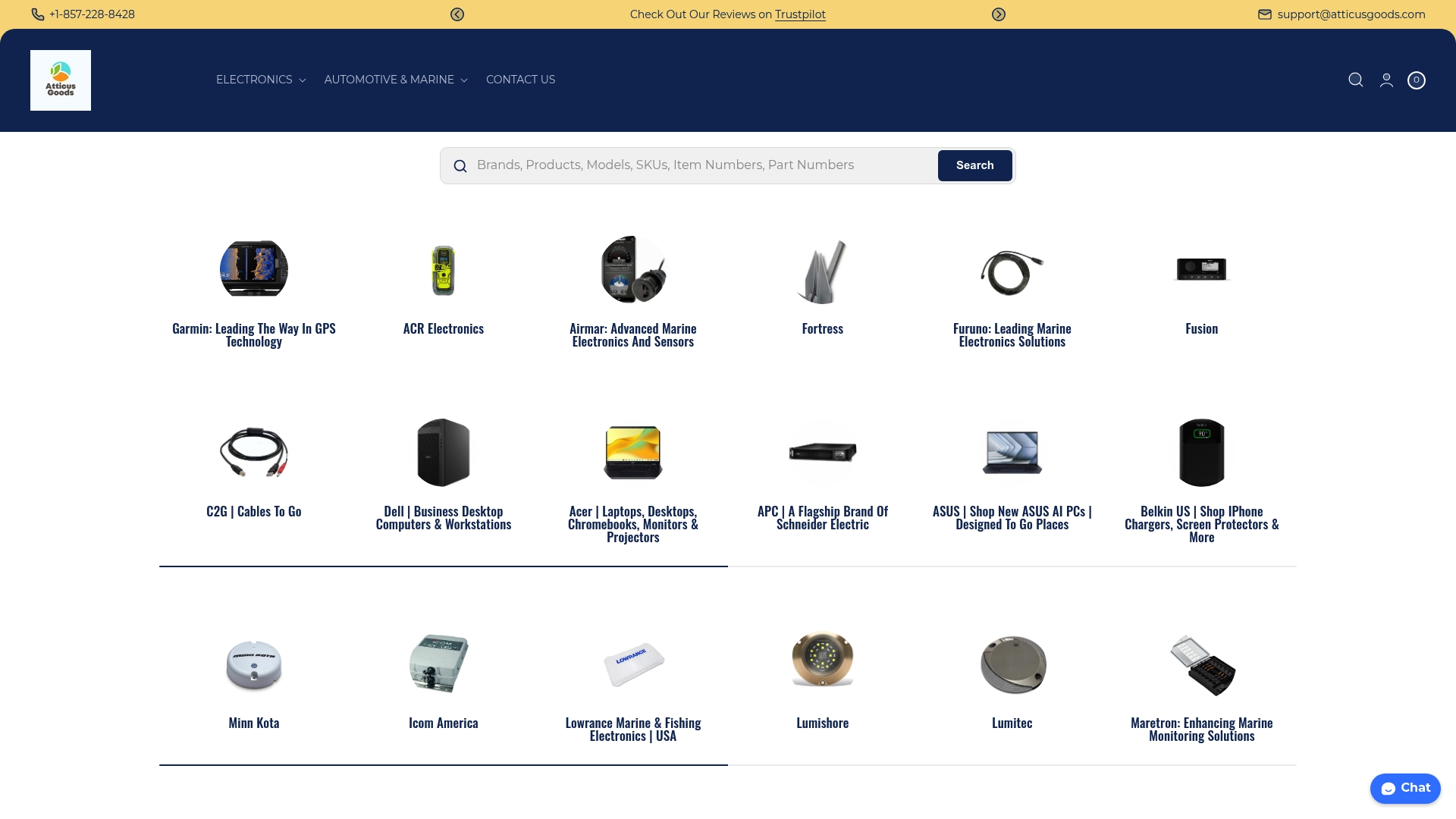
We carry a large in-stock electronics selection and ship across the U.S. promptly, so a deal you spot can arrive quickly.
-
Browse our electronics collection for available products
-
Set alerts for price drops on products you are watching
-
Read our electronics deals buyer’s guide before you buy
FAQ
What is the next big sale for electronics?
The next major windows are the fall retailer events, followed by Black Friday and Cyber Monday. Check event pages and alerts, since dates and offers are announced close to launch. If you need an item sooner, a current in-stock markdown is usually safer than waiting.
Which stores offer the best deals on Black Friday?
Large electronics retailers and big online marketplaces typically have the broadest selection. The best store depends on the product, so compare final prices, shipping and return terms across several sellers. Retailers with deep in-stock inventory tend to fill orders more reliably during the rush.
What are the current Amazon offers?
Amazon’s recent October event covered phones, headphones and Apple products, with coverage listing items like AirPods Pro 3 at $179. Offers change quickly, so confirm the price on Amazon’s own deal page before buying.
Which Amazon sale is best for electronics?
Amazon’s Prime and Big Deal Days events tend to be strongest for phones, headphones and streaming devices, while Black Friday and Cyber Monday offer the widest overall range. Match your purchase to the event that favors your category.
Sources
- The best October Prime Day tech deals we found | The Verge
- I’ve found the 35 top deals in the Best Buy Techtober sale — save up to 50% on LG, Sony, Ninja, Breville, Dell, HP, and more | TechRadar
- LG Deal Days: Up to $1,200 off latest mini LED and OLED TVs + $200 gift cards, 10% back, more