

Bulk electronics pricing negotiation is the process of securing below-list pricing, favorable payment terms, and added concessions from suppliers when purchasing electronics in quantities large enough to give buyers real leverage. Procurement specialists and small business owners who master this process can capture 15–25% in savings that first-time buyers routinely leave on the table. The key variables suppliers weigh are minimum order quantities (MOQs), lead times, and payment structures. Understanding all three before you open any negotiation is the difference between a good deal and a missed opportunity.
How to negotiate bulk electronics pricing: prerequisites and tools
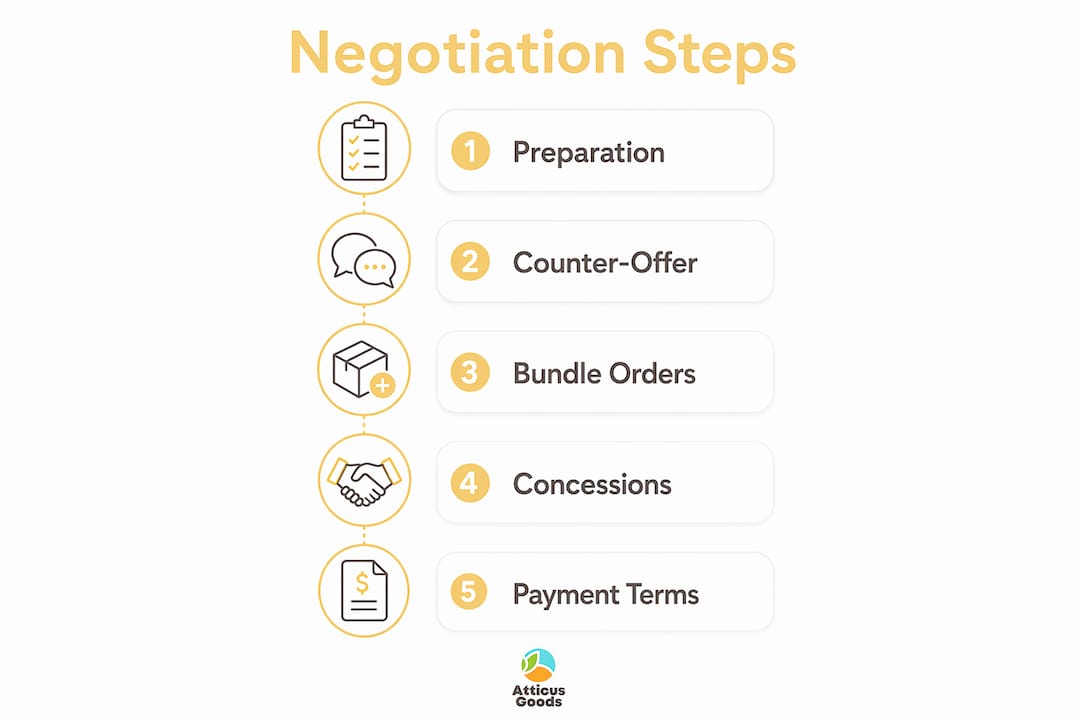
Preparation is the single biggest factor that separates buyers who win concessions from those who accept the first quote. Walking into a supplier conversation without benchmarks, specifications, or a clear order forecast hands the other side every advantage.

Understand MOQs and how to move them
MOQ is the minimum number of units a supplier will produce or ship in a single order. For most electronics categories, negotiation is expected once your order exceeds 100 units. That threshold is not a wall. If your cash flow limits you to a smaller first order, offer a higher unit price on that initial run and commit to a documented scale-up schedule. Suppliers accept this trade because it reduces their risk while keeping the relationship alive.
Know your total landed cost
Unit price is only one line item. Total landed cost includes tooling fees, freight, import tariffs, certification costs (such as FCC or CE compliance), and any warehousing charges on the receiving end. Buyers who compare only the Ex Works (EXW) price without accounting for these components routinely overpay by a wide margin. Build a simple cost model before you request quotes so you can evaluate offers on an apples-to-apples basis.
Build a standardized Request for Proposal
A well-structured RFP forces every supplier to quote against the same technical specifications, delivery requirements, and warranty terms. Without it, you end up comparing quotes that differ in scope, making it nearly impossible to identify the best offer. Include product specs, target MOQ, required lead time, preferred payment split, and warranty expectations. Attach any sample validation requirements upfront so there are no surprises after you commit.
Pro Tip: Collect at least three competing quotes before entering any negotiation. Documented price differences between vendors are your most credible leverage tool at the table.
How can you execute a successful bulk electronics negotiation?
Knowing your numbers is preparation. Executing the negotiation is a separate skill. The tactics below apply whether you are buying networking hardware, computing peripherals, or marine electronics.
Start with a realistic counter-offer
Open counter-offers at 10–20% below the asking price. That range aligns with market norms and signals that you are an informed buyer, not someone fishing for an unrealistic discount. Going lower than 20% without strong justification damages credibility and can end the conversation before it starts.
Bundle orders across categories
Consolidating orders across product categories into a single RFP increases your leverage significantly. Vendors trade deeper discounts for a larger share of your total spend. If you need networking switches, laptops, and power management hardware, buy them together rather than in separate transactions. The benefits of bundled purchasing extend beyond price, often unlocking priority scheduling and consolidated shipping.
Negotiate beyond the headline price
When a supplier holds firm on unit price, shift the conversation to concessions. Extended warranties, free shipping, and improved payment terms all have real dollar value. A supplier who will not move on price may readily offer a 24-month warranty instead of 12, or absorb freight costs on orders above a set threshold. These concessions reduce your total cost without requiring the supplier to cut their margin on the unit itself.
Use payment timing as a negotiation lever
Payment structure directly affects how suppliers prioritize your production run. A 30% deposit with 70% paid on the Bill of Lading is a recognized structure that gives suppliers enough upfront cash to start production while giving buyers protection until shipment is confirmed. Offering a higher deposit percentage in exchange for production priority or a faster delivery slot is a legitimate trade that both sides can accept.
Request volume discount tiers
Ask suppliers to structure pricing in tiers: one price for 100 units, a lower price for 250, and a lower price still for 500. Even if your current order sits at the first tier, having the structure documented in writing locks in the path to better pricing as your volume grows. This also signals to the supplier that you plan to be a repeat buyer, which shifts their incentive toward cooperation.
Pro Tip: Always request a pilot order clause. A smaller first shipment with a documented commitment to scale gives you sample validation before you commit your full budget.
What are the common pitfalls in bulk electronics purchasing?
Most negotiation failures come from predictable mistakes. Recognizing them before they happen is far cheaper than correcting them after a bad order ships.
- Focusing only on unit price. Total landed cost, not unit price, determines actual savings. A quote that looks 8% cheaper can cost more once freight, tariffs, and certification fees are added.
- Pushing for lower MOQs without offering anything in return. Suppliers have real production cost floors. Asking for a lower MOQ without offering a higher unit price or a scale-up commitment gives them no reason to agree.
- Accepting suspiciously low prices. Prices well below market benchmarks often signal compromised components, missing certifications, or hidden fees that surface at customs or after delivery.
- Ignoring sample validation. Paying for and testing samples before committing to a full order is not optional. It is the only reliable way to confirm that the product matches the spec sheet.
- Negotiating without timing awareness. Suppliers carry excess inventory at the end of fiscal quarters and before major trade shows. Timing your RFP to coincide with these windows gives you natural leverage without any additional pressure.
Buyers who misunderstand wholesale pricing flexibility miss 15–25% in potential savings. The price on a supplier’s quote sheet is a starting point, not a final offer. Treating it as fixed is the most expensive mistake a procurement buyer can make.
Slow or unreliable lead times are another common friction point. Standard manufacturing lead times for bulk electronics run 25–35 days, with expedited options negotiable down to 15–20 days when buyers offer higher deposits or favorable payment splits. If a supplier quotes outside that range without explanation, ask for a production schedule in writing before signing any agreement.
How to use market data to strengthen your negotiation position
Data is a more effective negotiation tool than pressure. Buyers who arrive with documented benchmarks, price histories, and usage forecasts consistently secure better terms than those who rely on assertiveness alone.
Benchmark pricing from multiple sources
Pull quotes from at least three vendors and cross-reference them against published industry price indexes where available. Citing competitor availability and documented price histories as leverage is more persuasive than simply stating that you can get a better price elsewhere. Show the number. Suppliers respond to specifics.
Incorporate forecasts into your RFP
Buyers who bring detailed order forecasts to the negotiation table increase their leverage because they reduce supplier uncertainty. A 12-month rolling forecast tells a supplier exactly how much revenue you represent. That visibility is worth concessions on price, lead time, and payment terms.
Negotiate protective contract clauses
Beyond price, push for clauses that protect you over the life of the supply agreement. Pricing freeze periods, lead time guarantees, firmware update commitments, and end-of-life notifications all reduce your operational risk. Component shortages and NAND manufacturing shifts can move electronics prices quickly. A pricing freeze clause locks your cost structure while the market fluctuates around you.
Pro Tip: Ask for a most-favored-nation (MFN) pricing clause. This requires the supplier to give you the same price they offer any other buyer at your volume level, automatically.
Key Takeaways
Effective bulk electronics negotiation requires preparation, market data, and a willingness to trade concessions beyond unit price to capture the full range of available savings.
| Point | Details |
|---|---|
| Prepare before you negotiate | Build a total landed cost model and collect at least three competing quotes before any supplier conversation. |
| MOQs are negotiable | Offer a higher unit price on smaller first orders with a documented scale-up plan to move suppliers off their MOQ floor. |
| Bundle orders for leverage | Consolidating multiple product categories into one RFP gives vendors a reason to offer deeper discounts. |
| Trade payment terms for speed | A 30% deposit with 70% on the Bill of Lading can unlock production priority and cut lead times to 15–20 days. |
| Data beats pressure | Documented price benchmarks and order forecasts are more persuasive than aggressive bargaining alone. |
What I’ve learned after years of watching bulk electronics deals go wrong
Procurement buyers consistently underestimate how much of the negotiation happens before the first call. The suppliers who give the best terms are not responding to pressure. They are responding to preparation. When you walk in with a detailed RFP, three competing quotes, and a 12-month forecast, you are not just a buyer. You are a predictable revenue stream. That changes the entire dynamic.
The second thing most buyers get wrong is treating the unit price as the only number that matters. I have watched procurement teams celebrate a 7% price reduction while quietly absorbing a 12-month warranty instead of 24, a freight cost that wiped out the savings, and a lead time that pushed their launch date back six weeks. The full value of a deal lives in the total package, not the headline number.
Relationship building is not a soft skill in this context. It is a financial strategy. Suppliers prioritize buyers they trust to pay on time, communicate clearly, and grow their orders. A supplier who knows you will be back next quarter with a larger order will absorb a concession today that they would never offer a one-time buyer. Invest in the relationship early, and the pricing follows.
Finally, do not skip sample validation to save time. A bad full-order shipment costs far more than the delay a sample run adds. Validate the product, confirm the certifications, and only then commit your full budget.
— Matthew Vista
Atticus Goods for your bulk electronics purchasing needs
Procurement buyers need a reliable source with transparent pricing, broad product selection, and fast delivery. Atticus Goods carries over 90,000 in-stock products across computing, networking, power management, and marine electronics, all available with next-day shipping across the United States.
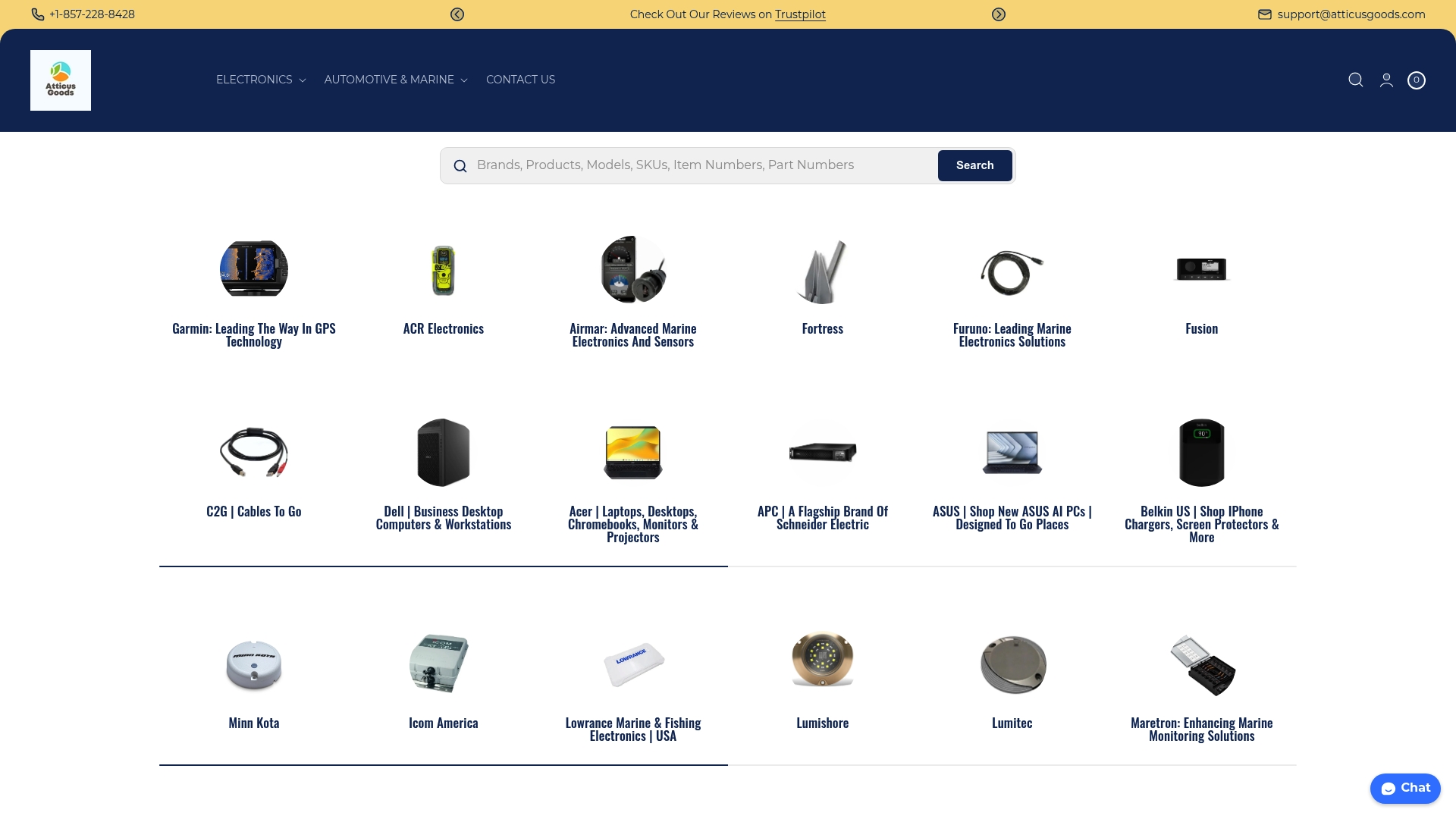
Whether you are sourcing networking hardware, computing peripherals, or specialty electronics, the Atticus Goods catalog gives you the product depth and pricing clarity to build a strong negotiation baseline. Buyers can review product specifications, compare categories, and place orders with confidence, backed by competitive pricing and professional support. For buyers who want to maximize electronics deals without the friction of opaque supplier quotes, Atticus Goods is a direct and practical starting point.
FAQ
What is bulk electronics pricing?
Bulk electronics pricing is the per-unit cost offered by a supplier when a buyer purchases above a set quantity threshold, typically 100 units or more. Prices at this level are negotiable and not fixed.
How do I start negotiating a bulk electronics order?
Collect at least three competing vendor quotes, build a total landed cost model, and open your counter-offer at 10–20% below the asking price. Bring documented benchmarks to support your position.
What concessions can I negotiate beyond unit price?
Extended warranties, free or subsidized freight, improved payment terms, pricing freeze clauses, and faster lead times are all negotiable. These concessions often deliver more value than a small price reduction alone.
How do payment terms affect lead times?
Offering a higher upfront deposit, such as 30% at order and 70% on the Bill of Lading, signals financial reliability and can reduce standard lead times from 25–35 days down to 15–20 days.
When is the best time to negotiate bulk electronics pricing?
Suppliers are most flexible at the end of fiscal quarters and before major trade shows, when they carry excess inventory and have stronger incentives to move stock at favorable terms.