

A network firewall is a security device that controls incoming and outgoing network traffic based on defined security policies, and it is the first line of defense for any business operating online. Without one, your internal systems are exposed to unauthorized access, malware, ransomware, and data theft. Small to mid-sized businesses are frequent targets precisely because attackers assume their defenses are weak. Understanding why businesses need a network firewall is not optional knowledge. It is the foundation of any serious approach to business network security.
Why businesses need a network firewall: the core case
A firewall does one fundamental job: it decides what traffic enters and leaves your network. Stateful inspection is the minimum standard for any business-grade firewall. That means the device tracks the state of active connections and blocks unsolicited inbound traffic that does not match an established session.
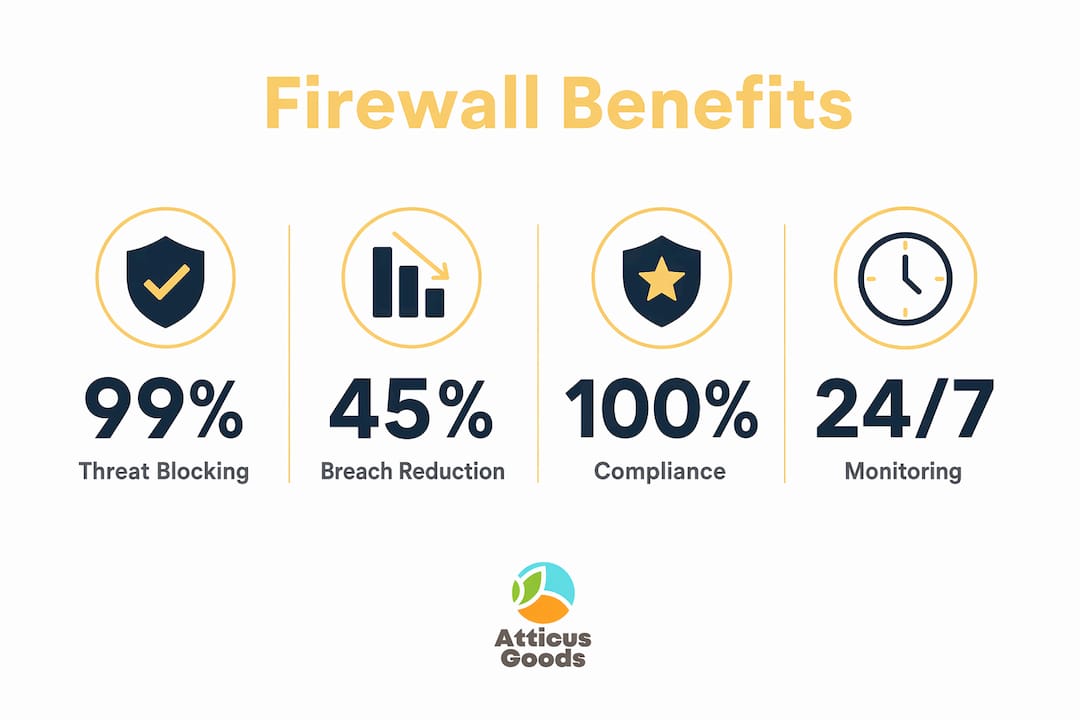
The business case goes beyond basic blocking. Regulatory frameworks including PCI DSS for payment card data, HIPAA for healthcare records, and GDPR for personal data of European customers mandate firewall protection as a baseline control. Non-compliance carries legal exposure and fines that dwarf the cost of proper equipment.

Cyberattacks also carry direct financial consequences. A breach forces expensive cleanup, potential litigation, customer notification costs, and reputational damage that can take years to repair. A firewall does not eliminate all risk, but it dramatically reduces the attack surface your business presents to the internet.
What are the key benefits firewalls provide to businesses?
Business firewalls deliver protection across several layers of risk that consumer-grade equipment simply cannot address.
| Benefit | Real-world example |
|---|---|
| Blocks unauthorized access | Prevents external attackers from reaching internal servers or databases |
| Stops malware and ransomware | Detects and drops malicious payloads before they reach endpoints |
| Enforces regulatory compliance | Satisfies PCI DSS, HIPAA, and GDPR firewall requirements |
| Limits breach damage | Isolates compromised segments so threats cannot spread laterally |
| Supports business continuity | Reduces downtime caused by network intrusions and denial-of-service attacks |
Modern business firewalls detect threats like command-and-control traffic hidden inside HTTPS, ransomware payloads, and sophisticated phishing attempts. These are threats that a basic router will never see because it does not inspect encrypted traffic.
SMBs benefit greatly from combining firewalls with intrusion prevention, endpoint protection, and strong cyber hygiene practices. No single tool covers every threat vector, but a properly configured firewall anchors the entire security stack.
Pro Tip: Set your firewall to a default-deny stance, meaning all traffic is blocked unless explicitly permitted. This forces you to define exactly what your business needs, rather than leaving doors open by default.
How do business-grade firewalls differ from consumer equipment?
Consumer routers cost under $200 and handle basic network address translation. Business-grade Next-Generation Firewalls (NGFWs) cost $1,500–$5,000 annually with active threat subscription services included. That price gap reflects a fundamental difference in capability, not just brand markup.
What consumer routers cannot do
Consumer equipment lacks SSL/TLS inspection, which means it cannot see inside encrypted traffic. Since the majority of web traffic today is encrypted, a consumer router is effectively blind to a large portion of potential threats. Attackers know this and deliberately route malicious payloads through HTTPS to avoid detection.
Business-grade firewalls add capabilities that change the security picture entirely:
- Deep packet inspection (DPI): Examines the actual content of packets, not just headers
- Intrusion Prevention System (IPS): Detects and blocks known attack patterns in real time
- Application control: Identifies and restricts specific applications regardless of port or protocol
- SSL/TLS inspection: Decrypts, inspects, and re-encrypts traffic to catch hidden threats
- Egress filtering: Monitors outbound command-and-control traffic to catch compromised devices phoning home
Many small business owners rely on the router their ISP provided at installation. That device was designed for home use. It has no IPS, no application control, and no threat intelligence updates. Treating it as a business firewall is a significant security gap.
Pro Tip: Check your current network device’s admin panel. If you cannot find settings for intrusion prevention or application control, you are likely running consumer-grade equipment that needs to be replaced.
What best practices maximize firewall effectiveness?
A firewall is only as effective as the policies behind it. Security effectiveness depends on policy quality, device placement, and active management. Buying the right hardware is step one. Managing it well is the ongoing commitment that actually keeps your business safe.
Build a layered security approach
Firewalls work best as part of a broader security stack. Layered security combines firewalls with multifactor authentication (MFA), regular patching, and endpoint security tools. Each layer catches what the others might miss. A firewall stops network-level threats. Endpoint security catches malware that arrives via email attachments. MFA prevents credential theft from becoming a full breach.
Segment your network
Network segmentation isolates sensitive systems so a single compromised device cannot reach your core data. Practical segmentation for a small business means separating guest Wi-Fi from your internal network, isolating point-of-sale (POS) systems, and placing IoT devices like cameras and printers on their own segment. A breach on the guest network stays on the guest network.
Understanding how your network infrastructure components work together makes segmentation easier to implement and maintain.
Maintain active firewall management
- Review firewall rules quarterly. Remove outdated rules that no longer reflect your business operations.
- Apply firmware updates promptly. Unpatched firewalls are a known attack vector. Quarterly firmware updates and continuous monitoring prevent vulnerabilities from sitting open for months.
- Monitor logs continuously. Automated alerting on unusual traffic patterns catches threats before they escalate.
- Test your configuration. Run periodic penetration tests or vulnerability scans to verify your policies work as intended.
- Document every change. A change log makes it possible to trace problems back to specific configuration updates.
The “set it and forget it” approach is the most common mistake small businesses make with firewalls. Attackers continuously develop new techniques. Your firewall policies need to evolve at the same pace.
How can small businesses approach firewall investment?
Choosing the right firewall starts with an honest assessment of your business. Three factors drive the decision: the size of your network, the sensitivity of the data you handle, and your compliance obligations.
A business that processes credit card payments needs PCI DSS compliance, which requires a firewall capable of network segmentation and traffic logging. A healthcare practice handling patient records needs HIPAA-compliant controls. Even a small retail operation storing customer emails and purchase history has data worth protecting.
Key questions to answer before purchasing:
- How many users and devices connect to your network daily?
- Do you handle regulated data such as payment cards, health records, or personal data?
- Do employees work remotely or connect through cloud services?
- Do you have the internal expertise to manage a firewall, or do you need a managed service?
Budget for ongoing costs, not just hardware. Business firewalls require active subscriptions for threat intelligence updates. A device without current threat signatures is significantly less effective than one with them. Factor $500–$1,500 per year for subscription services into your total cost of ownership.
Managed firewall services are worth considering if you lack dedicated IT staff. A managed service provider handles configuration, monitoring, and updates for a monthly fee. The cost is predictable, and the expertise is immediate.
Firewalls also need to integrate cleanly with the rest of your infrastructure. Understanding business-grade router options helps you plan how your firewall, router, and switches work together as a unified security architecture. A firewall placed incorrectly in the network topology provides far less protection than one positioned at the right enforcement point.
Key Takeaways
A network firewall is the foundational enforcement point for business network security, and its effectiveness depends entirely on proper selection, placement, and ongoing management.
| Point | Details |
|---|---|
| Firewalls are mandatory for compliance | PCI DSS, HIPAA, and GDPR all require firewall controls as a baseline security measure. |
| Business-grade differs from consumer | NGFWs include DPI, IPS, and SSL inspection that consumer routers completely lack. |
| Segmentation limits breach damage | Isolating guest Wi-Fi, POS, and IoT devices prevents one breach from spreading. |
| Active management is non-negotiable | Quarterly reviews, firmware updates, and log monitoring keep policies current and effective. |
| Total cost includes subscriptions | Budget for annual threat intelligence subscriptions, not just the hardware purchase price. |
Firewalls are enforcement points, not magic shields
I have worked with small business owners who bought a reputable business firewall, installed it, and then never touched it again for three years. When I reviewed their configurations, the rules were a mess of outdated exceptions, the firmware was two major versions behind, and the threat subscription had lapsed. The hardware was good. The management was not.
The most dangerous misconception about firewalls is that buying one means you are protected. A firewall is an enforcement point. It enforces the policies you write for it. If those policies are outdated, overly permissive, or simply wrong, the firewall faithfully enforces bad security. The device does exactly what you tell it to do.
I have also seen businesses skip business-grade equipment entirely because the upfront cost felt high. Then they experience a ransomware incident and spend far more on recovery, lost productivity, and customer trust than a proper firewall would have cost over five years. The math is not close.
The businesses that handle this well treat firewall management like they treat accounting. They schedule it, they document it, and they get professional help when they need it. Cybersecurity is not a one-time purchase. It is an ongoing operational discipline. Start with the right hardware, build the right policies, and commit to maintaining both.
— Matthew Vista
Networking hardware for your business security stack
Building a secure business network requires the right hardware at every layer, from your firewall to your switches and modems.
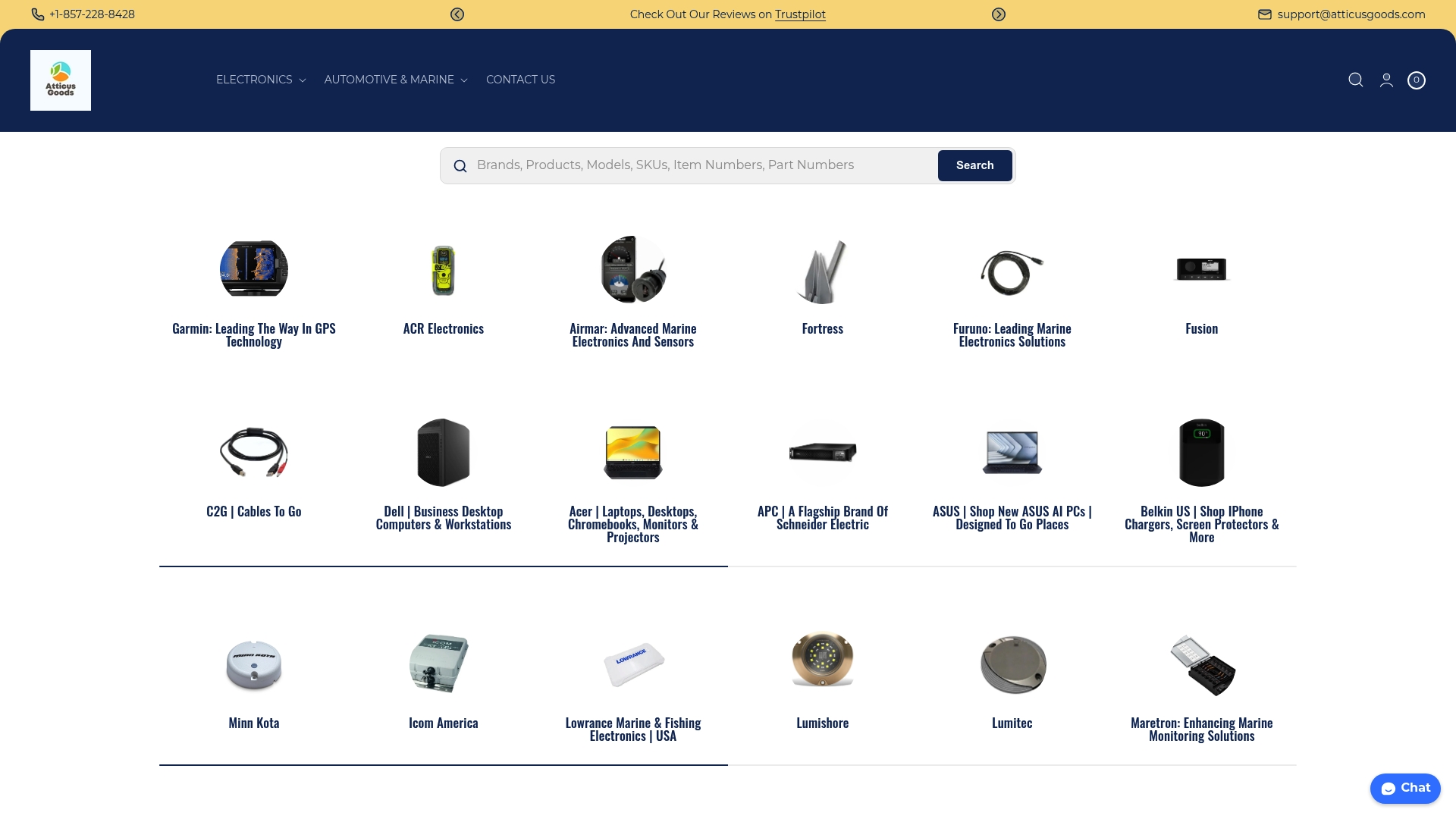
Atticus Goods carries a broad selection of networking and security hardware from trusted brands including Netgear, with next-day shipping across the United States. Whether you need a high-performance cable modem to pair with your firewall or a multi-gigabit smart switch to support network segmentation, Atticus Goods stocks the components small and mid-sized businesses need to build a complete, well-integrated network infrastructure. Browse the full catalog to find the right hardware for your setup.
FAQ
What is a network firewall in simple terms?
A network firewall is a security device that monitors and controls traffic flowing into and out of your network based on defined rules. It blocks unauthorized connections while allowing legitimate business traffic to pass.
Do small businesses really need a firewall?
Yes. Small businesses are frequent targets for cyberattacks, and regulatory frameworks like PCI DSS and HIPAA require firewall controls for any business handling payment or health data. Consumer routers do not meet these requirements.
What is the difference between a consumer router and a business firewall?
Consumer routers handle basic traffic routing but lack deep packet inspection, intrusion prevention, and SSL/TLS inspection. Business-grade firewalls inspect encrypted traffic, detect known attack patterns, and enforce application-level controls.
How often should a business update its firewall?
Firmware updates should be applied at least quarterly, and firewall rules should be reviewed on the same schedule. Threat intelligence subscriptions require annual renewal to keep detection signatures current.
What does network segmentation have to do with firewalls?
Firewalls enforce segmentation by controlling traffic between network zones. Separating guest Wi-Fi, POS systems, and IoT devices into distinct segments limits how far an attacker can move if one device is compromised.