

Waterproof marine connectors are sealed electrical interfaces designed to block salt spray, moisture, and vibration from degrading onboard circuits. Every boat owner who has dealt with a dead navigation light or a bilge pump that quit mid-storm already knows why use waterproof marine connectors matters. Standard automotive connectors fail fast in saltwater because salt water is a strong electrolyte that accelerates galvanic corrosion far beyond what freshwater causes. Protection ratings such as IP67, IP68, and IP69K define exactly how much water and pressure a connector can handle. Getting the right rating for the right location is the difference between a reliable vessel and an expensive repair.
Why use waterproof marine connectors: the core case
Salt fog, constant vibration, and moisture ingress are the three forces that destroy unprotected electrical connections at sea. Each one attacks a connector differently, and together they create failures that range from annoying to dangerous.
Salt fog is the most aggressive threat. Saltwater is a far stronger electrolyte than fresh water, which means galvanic corrosion accelerates dramatically on any exposed metal contact. A standard connector that lasts years in a car can corrode through in a single boating season. Once corrosion builds on a contact, resistance rises. Higher resistance means heat buildup, and heat buildup in a confined bilge or wiring harness is a fire risk.
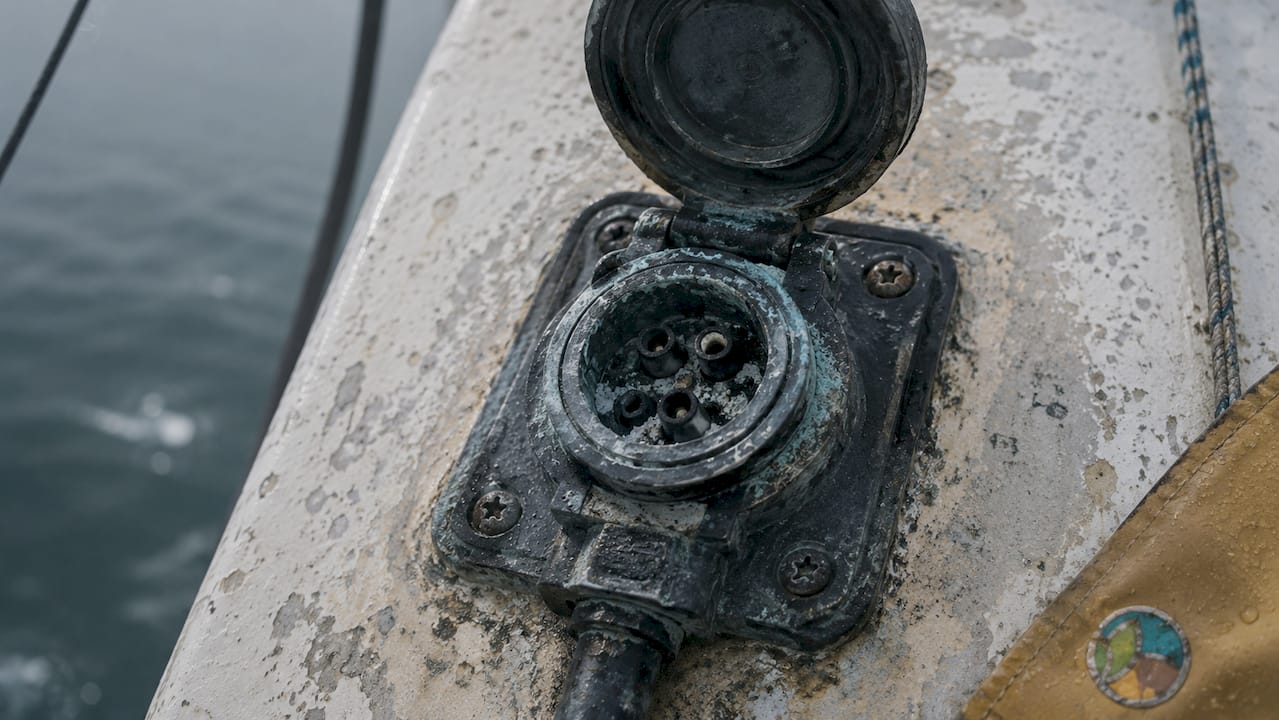
Vibration is the second attacker. Engine vibration, wave impact, and hull flex work together to loosen connections over time. A connector that starts with a solid mechanical lock can develop micro-movement at the contact point, causing intermittent failures. Intermittent failures are the hardest to diagnose because the system works fine at the dock and fails underway when you need it most.
Moisture ingress causes short circuits and corrupts sensor data. A GPS unit that receives a false ground signal through a wet connector can display wrong position data. A bilge pump sensor with moisture in its connector may fail to trigger when the bilge fills. These are not inconveniences. They are safety failures.
Pro Tip: Never use automotive-grade connectors on a marine installation, even temporarily. They lack the salt-spray resistance that marine-grade connectors provide, and a single season of exposure can corrode them beyond recovery.
What IP ratings and materials do marine connectors need?
IP ratings are the standard language for describing how well a connector resists water and dust. The International Electrotechnical Commission defines these ratings, and three ratings matter most for marine use: IP67, IP68, and IP69K.
| IP Rating | Protection Level | Typical Marine Application |
|---|---|---|
| IP67 | Immersion up to 1 meter for 30 minutes | Above-waterline deck fittings, navigation lights |
| IP68 | Continuous submersion beyond 1 meter | Below-waterline through-hull sensors, bilge wiring |
| IP69K | High-pressure, high-temperature washdown | Exposed deck equipment, commercial vessel machinery |
IP67 covers splash and wave exposure above the waterline. IP68 handles continuous submersion for below-waterline applications. IP69K is the rating you need when a pressure washer will hit the connector during routine cleaning. Choosing the wrong rating for a location creates a moisture bridge that forms inside the connector housing and causes premature failure.
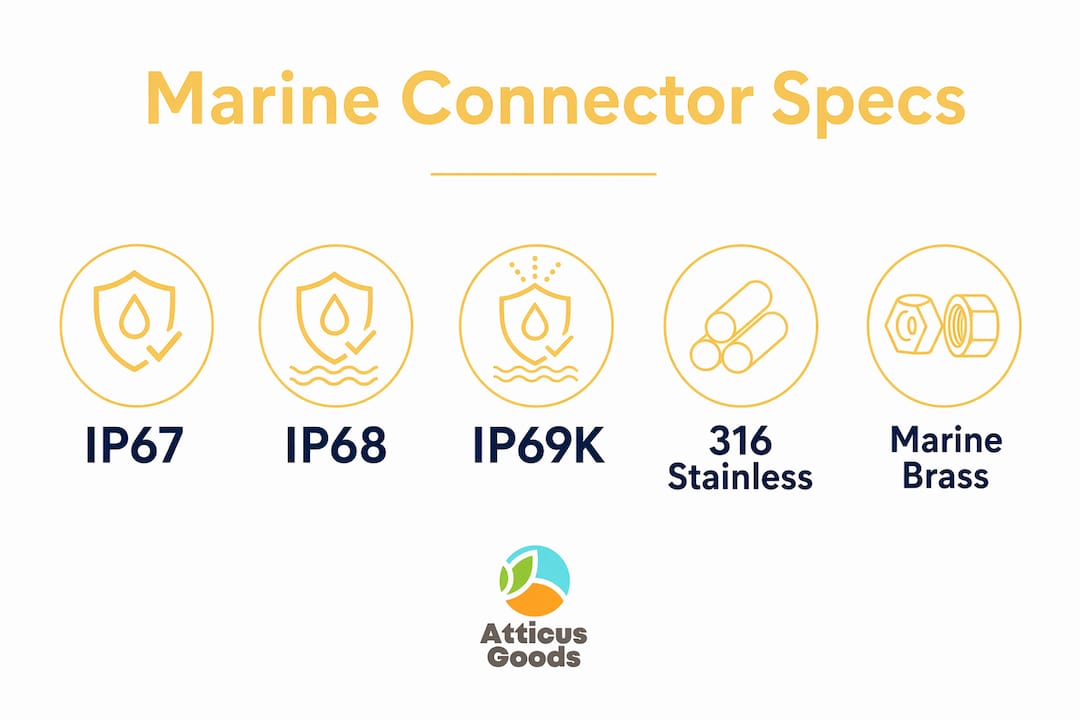
Material choice matters as much as the IP rating. 316 stainless steel, marine-grade brass, and tinned copper contacts are the industry standards for corrosion resistance. UV-stabilized housings prevent sunlight from degrading the plastic shell over time. Tinned copper contacts resist oxidation far better than bare copper in salt air. Matching connector materials to your hull material also reduces galvanic coupling between dissimilar metals, which is a separate corrosion mechanism that can attack fasteners and fittings near the connector.
Pro Tip: When installing connectors near stainless steel deck hardware, use a marine-grade dielectric grease on the contact surfaces. It displaces moisture and slows oxidation without affecting conductivity.
What are the main types of waterproof marine connectors?
Marine connectors come in several distinct designs, each suited to a specific job. Knowing which type to reach for saves time during installation and prevents failures caused by using the wrong connector for the application.
- Circular threaded connectors (M12, M16): These use a threaded collar to create a compression seal around the mating faces. They are the standard choice for navigation electronics, sensors, and instrument panels. The threaded lock resists vibration loosening better than a simple push-fit design.
- Heat shrink butt connectors: These create a permanent, waterproof splice by combining a crimp connection with an adhesive-lined heat shrink sleeve. When heated, the sleeve shrinks and the adhesive flows to seal the wire entry points. They are ideal for permanent wiring runs where the joint will not need to be disconnected.
- Molded cam type connectors: Molded connectors eliminate the mechanical joint between the cable and the connector body by forming the two as a single unit. This removes the most common failure point caused by vibration and moisture intrusion. They distribute mechanical stress along the cable rather than concentrating it at a joint.
- Marine-grade quick connectors with locking features: These allow fast connection and disconnection while maintaining a watertight seal. They are used for accessories that are regularly removed, such as portable electronics mounts and removable lighting.
Using a uniform connector family across a vessel prevents mismatched mating faces and incompatible sealing surfaces. A boat wired with three different connector systems from three different sources will eventually produce a situation where a replacement part does not mate correctly with the installed socket. That mismatch creates a gap in the seal.
Marine experts also distinguish between watertight connectors for direct deck exposure and interior connectors for humid cabin environments. Both require corrosion resistance, but deck-rated connectors must meet a higher IP standard than cabin connectors. Applying a deck-rated connector inside a cabin is never wrong. Applying a cabin-rated connector on deck is always a mistake.
How should you select and maintain marine connectors for long life?
Selecting the right connector starts with mapping every connection point on the vessel and assigning it an environmental zone. Connections above the waterline on an exposed deck need IP67 at minimum. Connections subject to pressure washing need IP69K. Connections below the waterline need IP68. This zone-based approach prevents the common mistake of using a single connector type everywhere and hoping it holds up.
- Match the IP rating to the zone. Write down where each connection lives before purchasing connectors. A bilge pump connection is not the same environment as a cabin light connection.
- Choose a single connector family for the whole vessel. Connector-centric design reduces downtime by keeping all mating faces and sealing surfaces compatible. Stock a small supply of spare connectors from the same family for quick repairs underway.
- Inspect seals and locking features at the start of each season. Regular inspection and cleaning extend connector life significantly. Look for cracked O-rings, discolored contacts, and locking collars that no longer click firmly into place.
- Avoid mixing metals. Stainless steel connectors mated to aluminum brackets create a galvanic couple. Use isolation washers or choose connector hardware that matches the surrounding material.
- Use molded connectors for critical power circuits. For bilge pumps, navigation lights, and engine control wiring, molded designs increase durability by eliminating field-assembly variability. A molded connector cannot be incorrectly assembled on the dock at 6 a.m. before a long passage.
For deeper guidance on wiring your vessel correctly, the marine wiring safety guide at Atticus Goods covers connector placement, wire sizing, and circuit protection in detail.
Pro Tip: After any significant offshore passage, disconnect and inspect your most-used connectors. Salt crystals accumulate inside even IP-rated connectors over time if the seals develop micro-cracks from UV exposure.
Key Takeaways
Waterproof marine connectors prevent corrosion, short circuits, and mechanical failure by matching IP-rated, marine-grade materials to the specific environmental demands of each zone on a vessel.
| Point | Details |
|---|---|
| Match IP rating to location | Use IP67 above waterline, IP68 below waterline, and IP69K for washdown zones. |
| Choose marine-grade materials | 316 stainless steel, marine-grade brass, and tinned copper contacts resist salt corrosion. |
| Use one connector family | A uniform connector system prevents mismatched seals and reduces onboard failures. |
| Inspect seals every season | Check O-rings, locking collars, and contacts at the start of each boating season. |
| Prioritize molded connectors for critical circuits | Molded designs eliminate field-assembly errors on bilge pumps, lights, and engine controls. |
The connector is never the place to cut corners
I have reviewed a lot of marine electrical failures over the years, and the pattern is almost always the same. The boat owner spent real money on quality electronics, quality wire, and quality circuit breakers. Then they used whatever connectors were on the shelf at the hardware store because connectors seem like a minor detail.
They are not a minor detail. The connector is the most mechanically stressed point in any wiring run. It gets disconnected and reconnected. It flexes with the hull. It sits in the bilge or on the deck where every environmental threat concentrates. A $4 connector protecting a $600 chartplotter is the weakest link in a system that costs far more than the connector.
The connector-centric design philosophy changes how you think about a vessel’s electrical system. Instead of specifying the electronics first and treating connectors as an afterthought, you specify the connector family first and build the system around it. That approach produces a vessel where every connection is compatible, every spare part fits, and every repair can be made quickly. I have seen this philosophy cut troubleshooting time dramatically on working vessels where downtime has a real cost.
The other mistake I see regularly is treating maintenance as optional. Connectors do not fail suddenly in most cases. They degrade slowly through seal micro-cracking, contact oxidation, and locking collar wear. A 15-minute inspection at the start of each season catches these issues before they become failures at sea. That inspection is the cheapest insurance a boat owner can buy.
For a broader look at how connectors fit into a complete electrical system, the marine electrical systems guide at Atticus Goods is worth reading before your next installation.
— Matthew Vista
Marine connector supplies at Atticus Goods
Atticus Goods carries marine-grade waterproof connectors and electrical supplies built to meet IP67, IP68, and IP69K standards for vessel use. Whether you are rewiring a bilge pump circuit, upgrading navigation light connections, or outfitting a new installation, the right connector is the foundation of a reliable system.
Atticus Goods ships next-day across the United States, so a connector failure does not have to sideline your vessel for a week waiting on parts. Browse the full selection of marine supplies and accessories to find connectors, wiring hardware, and electrical components suited to your vessel’s specific zones and requirements. Trusted brands, competitive pricing, and over 70,000 products in stock make Atticus Goods a practical first stop for any marine electrical project.
FAQ
What does IP67 mean for a marine connector?
IP67 means the connector can withstand immersion in water up to 1 meter deep for 30 minutes without water ingress. This rating suits above-waterline deck connections exposed to splash and wave wash.
Can I use automotive connectors on a boat?
Automotive connectors are not rated for saltwater exposure and fail quickly in marine environments. Salt water is a strong electrolyte that accelerates galvanic corrosion far beyond what automotive connectors are designed to resist.
What is the difference between IP68 and IP69K?
IP68 covers continuous submersion beyond 1 meter, while IP69K covers high-pressure, high-temperature washdown. Below-waterline applications need IP68; deck equipment cleaned with a pressure washer needs IP69K.
How often should marine connectors be inspected?
Inspect connectors at the start of each boating season and after any significant offshore passage. Check O-rings, locking collars, and contact surfaces for corrosion, cracking, or discoloration.
What materials should marine connectors be made from?
316 stainless steel, marine-grade brass, and tinned copper contacts are the industry standards for saltwater resistance. UV-stabilized housings protect the connector shell from sunlight degradation over time.